// IN THE NEWS

Cost of Trump’s tariffs ‘baked in’ to U.S. economy
Industry experts explain why the economic effects of tariffs are now embedded in the supply chain, regardless of policy reversals.
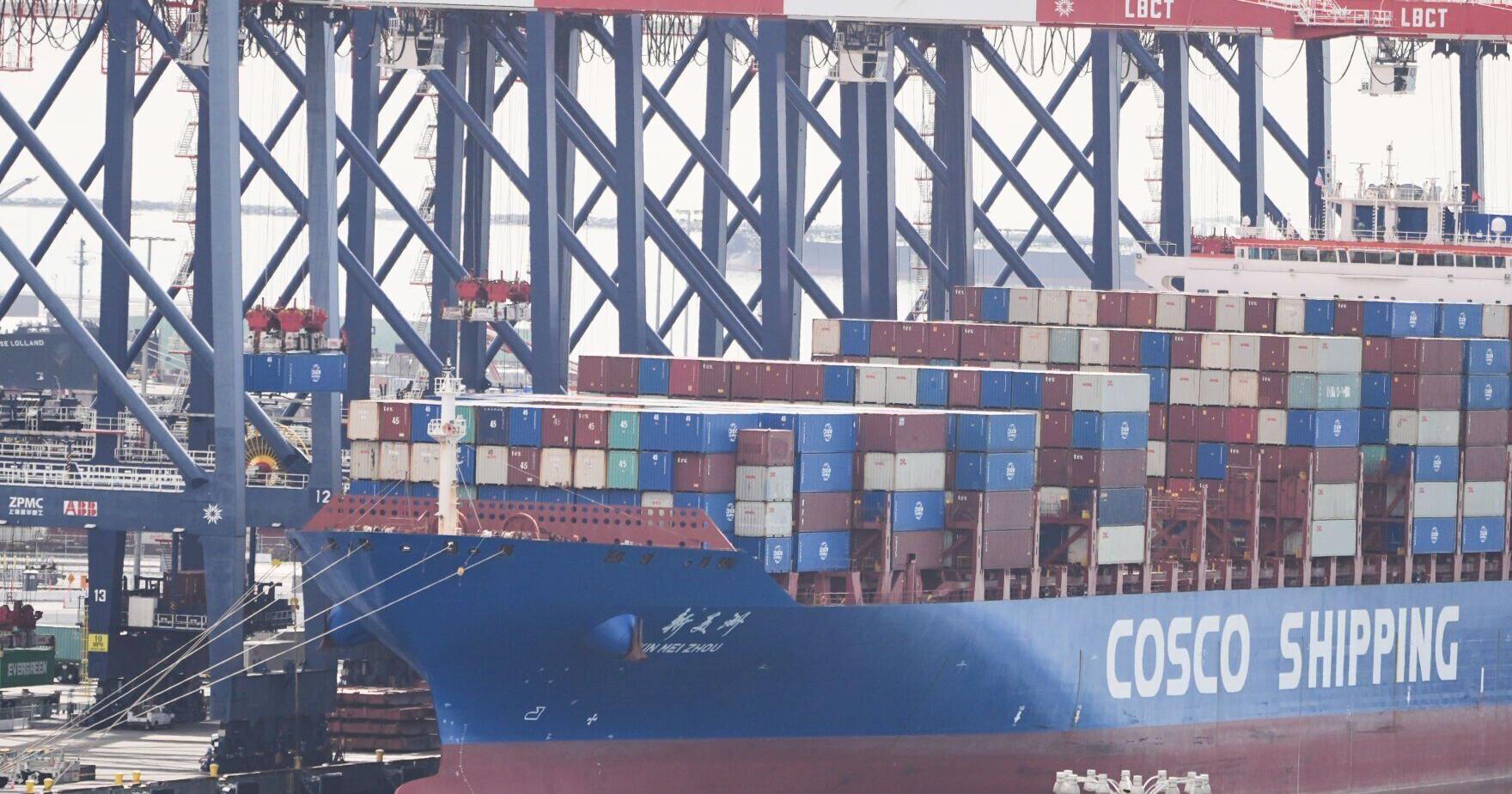
The U.S. Supreme Court invalidated many of President Donald Trump’s tariffs last month, and a trade court ruled March 4 that companies and importers who paid those import duties are due an estimated $130 billion in refunds from the federal government.
But don’t expect prices to come down in the wake of the legal demise of Trump’s Liberation Day, country-by-country tariffs that have been a centerpiece of his economic and foreign policies.
The Trump administration is expected to appeal and slow down tariff refunds, which could total as much as $175 billion, according to an analysis by the University of Pennsylvania’s Wharton School of Business.
Rathna Sharad, CEO and co-founder of Seattle-based international customs and logistics firm FlavorCloud, said the situation and potential refunds are uncharted waters.
“Importers also laid out billions for bonds and collateral required by U.S. Customs and Border Protection to guarantee payment of trade duties,” Sharad said. “Also important is that the entire global supply chain should understand that there is no precedent for these refunds and that Trump is very likely going to use non-IEEPA levers to keep tariffs in place.”
While the Supreme Court nixed Trump’s use of the International Emergency Economic Powers Act, or IEEPA, to set arbitrary and immediate tariffs, the U.S. president still has tariff powers under more conventional trade protocols.
In response to the court’s decision, Trump is imposing a 10 percent global tariff under the Trade Act of 1974 with presidential plans to take that levy to 15 percent. The tariff can stand for 150 days without congressional approval for an extension.
The U.S. and Israel war against Iran also is putting upward pressure on oil, gasoline and other prices with disruptions and uncertainty about shipping channels and petroleum production.
‘Frozen in our tracks’
Business owners, importers and supply chain experts don’t expect to see prices coming down after the Trump tariffs ruling.
Myles Schepetin, CEO of New York Custom Labels, which makes labels and patches for clothing, said the uncertainty around tariffs since Trump’s return to office last year has made decision-making difficult for small businesses.
“We feel frozen in our tracks, unable to make strategic pricing adjustments until tariff policy clarity and stability returns,” Schepetin said.
He said that uncertainty persists with Trump’s promise to use other tariff mechanisms, the levies’ temporary nature and court battles over refunds, including interest payments.
“Price hikes deemed necessary for an import-focused small business like ours will need to remain in place while tariff policy is updated under new legal authorities,” Schepetin said. “The 150-day deadline for congressional approval of the newly announced tariffs are being closely watched. Until then, we remain in a holding pattern.”
Mark Ang, CEO of GoBolt, a Toronto-based logistics company, also does not expect to see immediate price relief after the tariffs ruling.
“Prices may ease at the margin over time, but not immediately. Retail pricing reflects inventory purchased months in advance,” he said. “And after years of margin compression and cost volatility, many brands will first use any relief to stabilize their balance sheets.”
Ang said the changing nature of Trump’s trade moves has made sourcing changes difficult, but he has seen some shifts. Some of those changes have also put upward pressure on prices.
“Businesses either raised prices, absorbed the margin hit, or diversified sourcing, often shifting part of production out of China to Southeast Asia or Latin America. That diversification improved resilience but also added complexity and cost to supply chains,” Ang said.
By the numbers
Inflation has eased from its nearly double-digit, post-pandemic highs during the Biden administration. U.S. prices were up 2.4 percent in January 2026 from a year earlier, according to the Consumer Price Index.
Still, U.S. prices are up 26 percent from January 2020 (before the pandemic and its resets), according to the U.S. Bureau of Labor Statistics.
Shawn DuBravac, an economist and president and CEO of the Avrio Institute, a Virginia-based consulting firm, is a little more optimistic.
“Prices are already declining for certain goods and will likely continue. If tariff rates decline, prices could follow,” he said.
DuBravac said tariff rates could ease depending on the fate of Trump’s temporary tariffs under Section 122 of the Trade Act.
“According to the Yale Budget Lab analysis, before the IEEPA tariffs were struck down, consumers faced an overall average effective tariff rate of 16 percent, the highest since 1936,” he said.
“Immediately after the Supreme Court ruling, the rate dropped to 9.1 percent, still the highest since 1946, excluding 2025. Trump’s new Section 122 tariffs push the rate back up to 13.7 percent. If the Section 122 tariffs expire as scheduled in 150 days, the rate falls back to 9.1 percent. If they are made permanent, it stays near 13.7 percent,” DuBravac said.
While detractors say the tariffs have put upward pressure on prices and supply chains, Trump argues they have helped correct unfair trade deals and helped him stop multiple wars and conflicts without significant inflation.
‘Durability of the ruling’
Spencer Penn, CEO and cofounder of San Francisco-based LightSource, an AI-focused procurement firm, said the uncertainty around tariffs extends to the Supreme Court ruling and Trump’s promises to find other ways to impose import levies.
“One consideration is not just the ruling, but the question of the durability of the ruling. Is this elimination of emergency tariffs going to stick,” said Penn, a former executive of Tesla and Google-owned Waymo. “Or is the administration going to lift-and-shift the same tariffs instead into other laws? The Trump administration has not been shy about getting creative with its legislative and legal approaches to achieve their objectives.”
On March 4, attorneys general from two dozen Democratic states, including California, New York, Minnesota, North Carolina, Washington, Wisconsin and Maryland, challenged Trump’s new global tariffs in court.
“The focus right now should be on paying people back, not doubling down on illegal tariffs,” said Oregon Attorney General Dan Rayfield, who is helping lead the lawsuit. “People are already making hard choices about what to put in their shopping cart. Prices on basics like groceries, clothing and other essentials have all been skyrocketing.”
No ‘crystal ball’
There’s also the question of how sticky and baked-in prices are and if sellers are willing to lower them in an economic landscape that has seen higher costs for housing, food, entertainment and cars.
Sellers also face the question of lowering prices or keeping them in place to increase profit margins.
“Those tariff costs, now, are thoroughly baked into importers’ prices, and what would have been a maintained or compressed margin is now expected to open up because the tariff bills are expected to decrease,” said Robert Khachatryan, CEO and founder of Los Angeles-based Freight Right Global Logistics.
“Businesses stand to keep prices where they’re at or continue to increase them so long as there’s the latitude to do so,” he said.
That’s not good news for consumers, with many American households living ‘paycheck-to-paycheck’ and dealing with high levels of debt.
“The largest impact of the tariffs is on consumers due to them absorbing the higher prices,” said Kenneth Eade, a Los Angeles-based attorney specializing in e-commerce.
Eade said on the business side, smaller and medium-sized sellers of consumer and home goods have felt the brunt of tariffs.
While there is continued uncertainty about trade and inflation, Jeff Bornino, president of North America at TMX Transform, an international supply chain consulting firm, said the situation also is an opportunity.
“No one has a crystal ball when it comes to the future of tariffs, and this apparent reversal is a sign of just how unpredictable it is,” Bornino said.
“However, that unpredictability is an opportunity for the most forward-thinking supply chain organizations. The companies that will outperform aren’t trying to guess policy outcomes nor are they stuck in wait-and-see mode. Instead, they are building ‘what-if’ scenarios using modeling and digital simulation to stress-test sourcing, automation and network options to ensure they are prepared for the business impact of their decision,” he said. “In today’s geopolitical environment, resilience comes from preparation, not prediction.”
See this sourcing workflow in practice.
LightSource is the AI-native sourcing platform for direct materials. See it on your own parts and suppliers.