Verified Sep 2026
Batteries & E-Mobility
·

Moriguchi, Japan
·
Since 1918
Panasonic Energy Co., Ltd. is a Japan-headquartered manufacturer of cylindrical lithium-ion batteries for electric vehicles, dry batteries, and industrial storage systems, operating as a wholly owned subsidiary of Panasonic Holdings (TYO: 6752). It supplies 2170 and 4680 EV cells to Tesla, Subaru, Lucid, and Zoox from facilities in Japan, Nevada, and Kansas, with combined US capacity approaching 73 GWh annually.

Panasonic Energy at a glance
Revenue
¥873.2B
FY2025 · segment · ¥984.2B FY2026
Employees
~22,200
Consolidated · April 2026
Founded
1918
Matsushita Electric 1918 · battery ops 1931 · current entity Apr 2022
Headquarters
Moriguchi, Japan
Ownership
Panasonic Holdings Corp.
TYO: 6752 · wholly owned subsidiary
Certifications
IATF 16949
Claimed · automotive sites
Known customers
Tesla · Subaru · Lucid · Zoox · Harbinger
Company press releases
Industries
Automotive
Electric Vehicles
Electronics
Industrial Equipment
STABILITY SIGNALS
Established & strong
¥873.2B revenue (FY2025), 13.8% operating margin, backed by Panasonic Holdings (TYO: 6752).
Battery operations dating to 1931; 20 manufacturing sites across Japan, North America, and China as of March 2025.
Documented supply agreements with Tesla, Subaru, Lucid Motors, Zoox, and Harbinger, with the Kansas Factory opened July 2025 targeting 32 GWh annual capacity.
What Panasonic Energy makes
Panasonic Energy Co., Ltd. develops and manufactures cylindrical lithium-ion batteries for electric vehicles, dry batteries, lithium primary batteries, nickel-metal hydride batteries, and storage battery systems for industrial and data center applications. Within automotive supply tiers, the company operates at the Tier 1 level, supplying battery cells directly to vehicle manufacturers and EV program integrators.
The core automotive product line centers on two cylindrical cell formats. The 2170 cell, produced at scale since 2017, powers the majority of the company's current EV supply volume. The 4680 cell, a higher-capacity format with five times the energy content of the 2170, began mass production at the Wakayama Factory in Japan in late 2024 and represents the next generation of the company's in-vehicle offering. Both formats use cylindrical form factors chosen for manufacturing precision, thermal management, and the safety record accumulated across more than 19 billion cells delivered to date.
Beyond automotive drive batteries, Panasonic Energy supplies micro batteries and lithium primary cells to the healthcare and mobility security markets, and stationary storage battery systems to data center operators -- a segment that grew 28% in fiscal year 2025 as demand for AI infrastructure expanded. The company reports 20 manufacturing sites globally, including nine in Japan and eleven overseas, and holds more than 11,000 active battery patents.
Financial performance
Panasonic Energy reported net sales of ¥873.2 billion in fiscal year 2025 (ended March 31, 2025), with operating profit of ¥120.2 billion -- an operating margin of 13.8%, up from 9.7% the prior year. The in-vehicle segment declined 20% year on year to ¥481.2 billion, reflecting slower EV market growth and price revisions tied to lower raw material costs; the industrial and consumer segment grew 28% to ¥392.2 billion, driven by data center storage battery demand.
For the subsequent fiscal year (FY3/2026, ended March 31, 2026), the company's own profile page reports sales of ¥984.2 billion and operating profit of ¥69.8 billion -- a 12.7% revenue increase over FY2025 but a compression in operating margin to 7.1%, consistent with the company's stated transition from an investment phase into a ramp-and-recovery phase for the new Kansas Factory.
The company employs approximately 22,200 people on a consolidated basis as of April 1, 2026, up from about 20,679 at the end of FY2025. Panasonic Energy is a wholly owned operating company of Panasonic Holdings Corporation (Tokyo Stock Exchange: 6752), which reported consolidated net sales of ¥8,048.7 billion in FY3/2026 across its five operating segments.
In the Berylls by AlixPartners Top-100 global automotive supplier study for 2026 (FY2025 perimeter), Panasonic Energy ranks 71st with an automotive-scope revenue figure of approximately €4.7 billion. The large reported year-on-year decline in that study reflects the December 2024 deconsolidation of Panasonic Automotive Systems Co., Ltd. (PAS, now ranked separately as Mobitera), not a collapse in operations.
Ownership and history
The energy operations behind Panasonic Energy trace to September 1931, when Matsushita Electric began in-house production of dry batteries. A dedicated battery subsidiary, National Storage Battery Co., Ltd., was established in February 1935. Battery production has continued through successive organizational forms -- Matsushita Battery Industrial Co., Ltd. (1979), the Panasonic Corporation Energy Company (2008), and the Energy Company of the Industrial Solutions Company (2019) -- before the current entity, Panasonic Energy Co., Ltd., was formally incorporated as a standalone operating company under the Panasonic Group's operating-company system in April 2022.
Panasonic Holdings Corporation remains the parent. The holding company is listed on the Tokyo Stock Exchange (6752) and reported ¥8,048.7 billion in consolidated net sales for FY3/2026 with 183,685 employees worldwide across 447 consolidated companies.
The Nevada Factory in Sparks, Nevada, which operates within Tesla's Gigafactory, began production in January 2017 and now has annual lithium-ion cell capacity of approximately 41 GWh. The Kansas Factory in De Soto, Kansas, opened in July 2025 as the company's second North American site, targeting 32 GWh annually -- bringing total US production capacity to approximately 73 GWh once both facilities are fully ramped.
Certifications and quality
Panasonic Energy claims IATF 16949 certification at its automotive manufacturing sites, the standard quality management requirement for Tier 1 automotive battery suppliers. The company's integrated report describes a structured new product development flow with design review gates, trial mass production approval steps, and a shipping release process. As of July 2025, 17 of 21 manufacturing sites had achieved net-zero CO2 status under the company's environmental program, per company disclosures.
The automotive battery business has accumulated a documented safety record: the company reports no vehicle recalls attributable to its cells across more than 19 billion cells supplied as of March 2025, per its own investor materials.
Known customers
Panasonic Energy has documented supply relationships with several major EV programs, established through company press releases and joint announcements.
Customer | Evidence | Confidence |
|---|---|---|
Tesla | Production of 2170 cells at Nevada Gigafactory since 2017; Wakayama 4680 cell supply in preparation, per company investor materials (2017 -- present) | Documented |
Subaru | Joint preparation agreement for battery supply and new Japan factory, per joint press release (Sep 2024) | Documented |
Lucid Motors | Supply of latest-generation EV cells for the Lucid Gravity Grand Touring, per joint press release (Jan 2025) | Documented |
Zoox | Multi-year agreement for 2170 cells beginning early 2026, per joint press release (Nov 2025) | Documented |
Harbinger, a medium-duty electric truck manufacturer, announced Panasonic Energy as its official battery cell supplier in April 2025, per a company press release.
Frequently asked questions
What does Panasonic Energy make?
Panasonic Energy makes cylindrical lithium-ion batteries for electric vehicles (including the 2170 and 4680 cell formats), dry batteries, lithium primary batteries, nickel-metal hydride batteries, and storage battery systems for industrial and data center use. It is a wholly owned subsidiary of Panasonic Holdings and is recognized as a Tier 1 supplier to EV manufacturers.
Who owns Panasonic Energy?
Panasonic Energy Co., Ltd. is a wholly owned operating company of Panasonic Holdings Corporation, which is listed on the Tokyo Stock Exchange under the ticker 6752. Panasonic Holdings reported net sales of ¥8,048.7 billion in FY3/2026 across its five business segments.
What is Panasonic Energy's revenue?
Panasonic Energy reported net sales of ¥873.2 billion in fiscal year 2025 (ended March 31, 2025) and ¥984.2 billion in fiscal year 2026 (ended March 31, 2026), per the company's own profile page. The Berylls by AlixPartners Top-100 study for 2026 placed the automotive-scope revenue at approximately €4.7 billion, ranking the company 71st globally.
Where is Panasonic Energy headquartered?
Panasonic Energy is headquartered at 1-1, Matsushita-cho, Moriguchi-shi, Osaka 570-8511, Japan, approximately a ten-minute walk from Doi Station on the Keihan Line. The company also operates major facilities in Wakayama, Japan, and at two US sites: Sparks, Nevada, and De Soto, Kansas.
Who are Panasonic Energy's main customers?
The company's documented automotive customers include Tesla (Nevada Gigafactory and 4680 cell supply from Japan), Subaru (joint preparation agreement announced September 2024), Lucid Motors (Gravity Grand Touring, January 2025), Zoox (multi-year robotaxi agreement, November 2025), and Harbinger (medium-duty EVs, April 2025), per company press releases.
Last verified Sep 2026. Is this your company? Request a correction.
Latest news
Sep 2026
Panasonic Energy launched Energy Innovation Square, a new global battery R&D hub in Kadoma, Osaka, bringing together ~500 employees to accelerate development of next-generation cells for automotive and data center use (Panasonic Energy press release).
Oct 2025
Panasonic Energy and Brown University announced a joint development agreement to advance next-generation lithium-ion battery materials through diagnostics analysis (Panasonic Energy press release).
Nov 2025
Panasonic Energy announced a multi-year agreement to supply 2170 lithium-ion cells to Zoox, the Amazon-owned robotaxi company, beginning early 2026 (Panasonic Energy press release).
Refreshed weekly · updated Sep 22, 2026
Leadership

Kazuo Tadanobu
President, CEO

Yasuaki Takamoto
Executive VP, Mobility Energy Business
Location & contact

Inside the facility
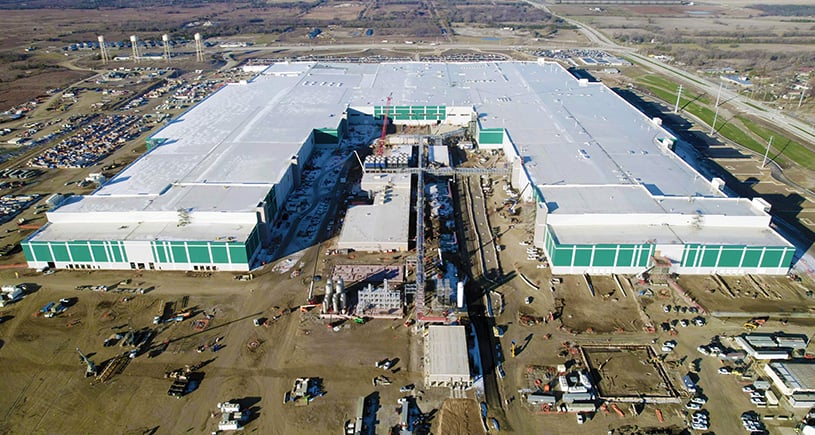
Aerial view of the Kansas Factory, De Soto, Kansas -- one of North America's largest EV battery plants, opened July 2025
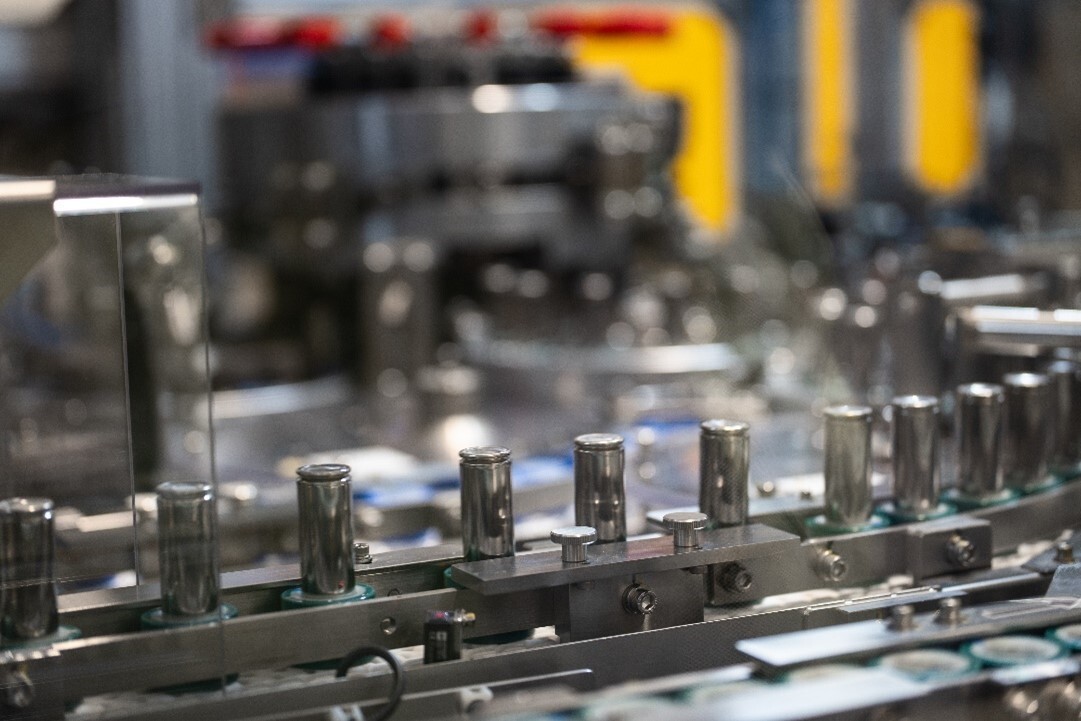
2170 cylindrical lithium-ion cells on the assembly line at a Panasonic Energy manufacturing facility

Energy Innovation Square, Kadoma, Osaka -- Panasonic Energy's new global battery R&D hub, launched September 2026
Photos: energy.na.panasonic.com, news.panasonic.com (press use)
Evaluating suppliers like these?
LightSource gives procurement teams verified supplier intelligence and AI-run sourcing events.