
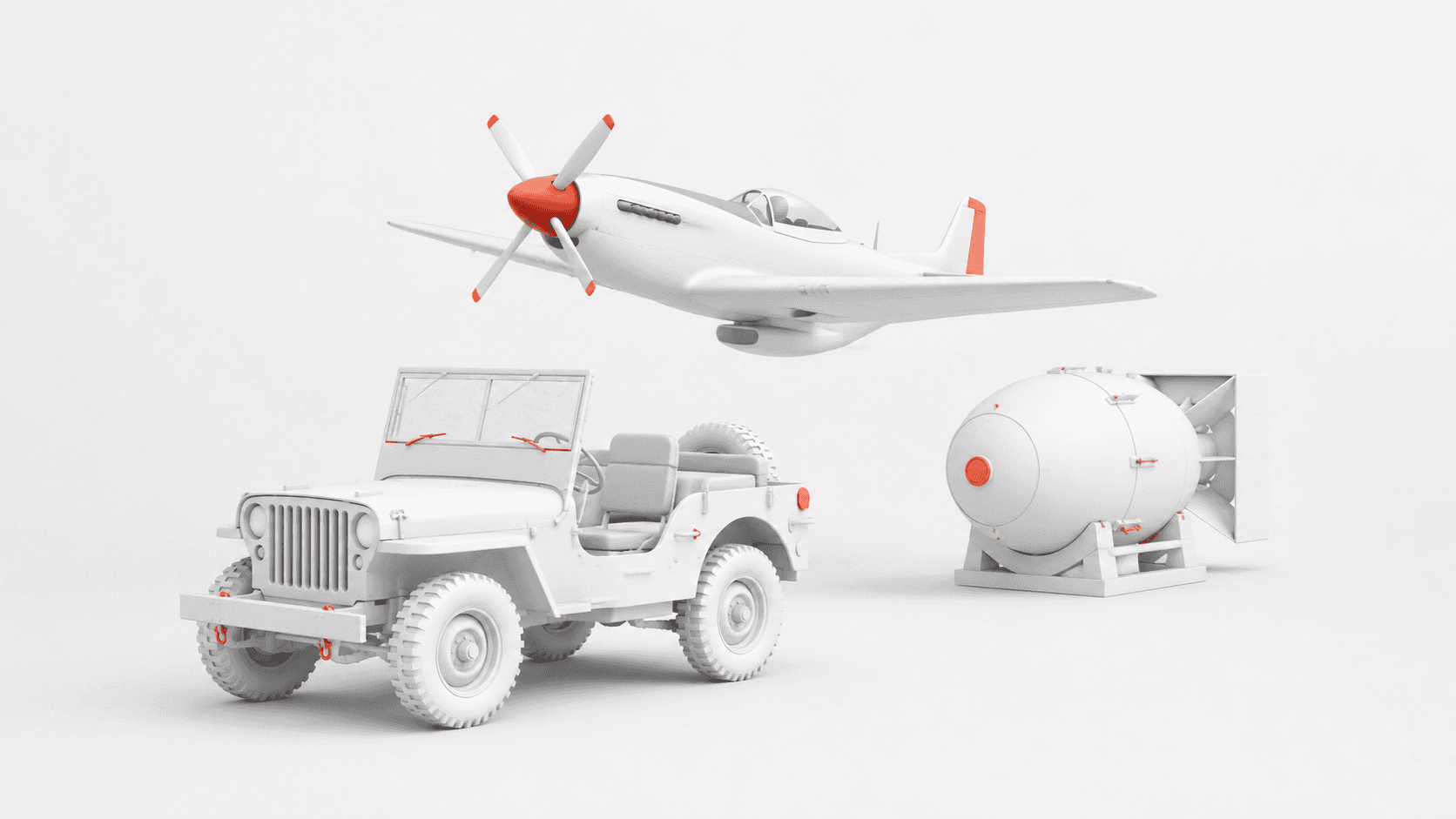
Necessity is the mother of invention. The cliche is also the most durable observation in industrial history. The fastest, most consequential New Product Introduction programs in the historical record were not driven by markets. They were driven by existential pressure -- the kind of pressure that collapses bureaucratic timelines, dissolves committee reviews, and forces an entire society to accept that the program will ship or the country will lose.
What follows is our list of the ten greatest wartime NPI projects of all time. These are programs where the demands of conflict forced the introduction of products at velocities and scales that peacetime industry has never matched. Some of the products are morally complicated. All of the programs left a legacy that reshaped industries long after the wars ended.
These are listed chronologically.
1. Eli Whitney and Interchangeable Parts (1798-1809)
In 1798, Eli Whitney signed a contract with the US government to manufacture 10,000 muskets in two years. He did not deliver on time -- the actual program took roughly a decade -- but the manufacturing methodology he developed in the attempt is the foundation of everything that came after. Whitney built jigs, fixtures, and gauges that allowed unskilled labor to produce musket components with enough dimensional consistency that parts from different muskets could be interchanged.
Before Whitney, every musket was a hand-fitted bespoke object. After Whitney (and parallel work by Simeon North and the federal armories at Springfield and Harpers Ferry), military procurement was the proving ground for a manufacturing philosophy that eventually scaled into automobiles, appliances, and every mass-produced object on earth.
The legacy: interchangeable parts is the precondition for every other entry on this list, and for most of the peacetime list as well.
2. USS Monitor (1861-1862)
In October 1861, the Union Navy learned that the Confederacy was converting the captured frigate USS Merrimack into an ironclad warship that threatened to break the Union blockade. John Ericsson signed a contract to design and build a counter on October 4. The Monitor was launched on January 30, 1862. 101 days from contract to launch.
The ship was an engineering oddity -- a flat iron deck riding nearly flush with the waterline, with a single rotating turret carrying two 11-inch guns. Ericsson’s program ran across multiple subcontractors in New York, with the hull built at Continental Iron Works in Greenpoint and the turret machined at Novelty Iron Works. The ship arrived at Hampton Roads on March 8, hours after the CSS Virginia had sunk two Union frigates. The next morning, Monitor and Virginia fought to a draw, and the era of wooden warships ended.
The legacy: the Monitor’s turret, armor, and steam-driven systems became the blueprint for every battleship built over the next eighty years. The 101-day timeline remains a benchmark for crash naval programs.
3. The Jeep (1940-1941)
On July 11, 1940, the US Army issued a specification for a light reconnaissance vehicle and required prototypes within 49 days. American Bantam was the only company willing to attempt the timeline. Bantam delivered a running prototype on September 23, 1940 -- 49 days. The Army then handed the design to Willys-Overland and Ford to spread production risk, and the three companies collectively built more than 640,000 Jeeps during the war.
The Jeep program is one of the cleanest demonstrations in industrial history of how a forcing-function timeline -- “49 days or no contract” -- can produce a result that two-year peacetime programs cannot. The vehicle was designed for a specific battlefield mission, but its post-war legacy created the entire SUV and off-road category.
The legacy: the modern Jeep brand, the Land Rover, and every recreational off-road vehicle on the road today descend from a 49-day Army specification.
4. Radar and the Cavity Magnetron (1940-1943)
In September 1940, the Tizard Mission carried a small metal device from Britain to the United States. The cavity magnetron, developed by John Randall and Harry Boot at the University of Birmingham, generated microwave-frequency radio energy at power levels that made airborne and shipborne radar practical for the first time. The British handed the device to the Americans because Britain had no industrial capacity left to productionize it under the Blitz.
MIT’s Radiation Laboratory was stood up on October 12, 1940, with a small team and a mandate to productionize radar systems for the Allied war effort. By 1945, the Rad Lab had grown to nearly 4,000 staff, had developed roughly 100 different radar systems, and had productionized them through American industry at a scale that won the Battle of the Atlantic and made night bombing possible.
The legacy: the cavity magnetron is in every microwave oven on earth. The Rad Lab alumni founded the modern American electronics industry. Five Rad Lab veterans won Nobel Prizes.
5. North American P-51 Mustang (1940)
In April 1940, the British Purchasing Commission asked North American Aviation to license-build the Curtiss P-40 fighter for the Royal Air Force. NAA’s president, Dutch Kindelberger, made an audacious counter-offer: NAA would design and build a better fighter from scratch, in 120 days. The British accepted. The first NA-73X prototype rolled out 117 days after contract signing.
The original Mustang used an Allison V-1710 engine that performed poorly at high altitude. The aircraft became great when British engineers swapped in the Rolls-Royce Merlin engine in 1942 -- a redesign that Packard then productionized at scale in the United States. By the end of the war, more than 15,000 Mustangs had been built, and the long-range Mustang escort capability is widely credited with breaking the Luftwaffe over Germany.
The legacy: the 117-day prototype timeline remains the canonical example of crash-program aircraft development. The Merlin-engine swap is one of the most successful mid-program redesigns in aviation history.
6. Liberty Ships (1941-1945)
The Allied war effort needed cargo ships faster than traditional shipyards could build them. Henry Kaiser’s shipyards on the West Coast adopted prefabrication and welding (instead of riveting) and drove the average build time for a Liberty Ship from 230 days down to 42 days. The most famous single build, the SS Robert E. Peary at Richmond Shipyard No. 2, was assembled in 4 days, 15 hours, and 29 minutes -- a publicity stunt, but a publicity stunt that demonstrated what the system was capable of.
Across the program, eighteen American shipyards built 2,710 Liberty Ships in under four years. The ships were ugly, slow, and built to a deliberately low quality target -- the design assumption was that a Liberty Ship only needed to survive a few wartime crossings to pay for itself. Many of them survived for decades.
The legacy: modular construction, prefabrication, and welded ship hulls became the global shipbuilding standard. Henry Kaiser’s organizational methods became the template for the postwar American industrial corporation.
7. The Manhattan Project (1942-1945)
Roughly 130,000 people. Three production sites built from raw land at Oak Ridge, Hanford, and Los Alamos. The whole program cost about $30 billion in today's dollars -- which the AI infrastructure buildout now spends roughly every two weeks, a comparison I unpacked in my takeaways from the Berkeley Agentic AI Summit. Two parallel uranium enrichment technologies (gaseous diffusion and electromagnetic separation) and a plutonium reactor program developed simultaneously. A working device delivered roughly 30 months from program kickoff.
The Manhattan Project is the canonical example of parallel-paths NPI at industrial scale. Leslie Groves and Robert Oppenheimer ran a program that refused to bet on a single technical approach, built parallel production capacity for every leading candidate, and killed the losers late. The program institutionalized the idea that the cost of running multiple paths in parallel is small compared to the cost of betting on the wrong one.
The legacy: every modern crash program, from mRNA vaccines to lunar landers to hyperscale chip fabs, borrows the parallel-paths methodology that Groves and Oppenheimer formalized. The moral weight of the program is real and worth acknowledging, but the manufacturing playbook it produced is foundational.
8. Penicillin Mass Production (1941-1945)
Howard Florey and Ernst Chain demonstrated penicillin’s clinical potential in 1940, but production at the time was measured in milligrams. The drug was so scarce that doctors recovered it from patients’ urine to re-administer it. By the end of 1945, US manufacturers were producing 650 billion units per month. Pfizer alone, working in a converted Brooklyn ice plant, was producing more than half the global supply.
The breakthrough was deep-tank fermentation. Most pharmaceutical companies in 1941 grew penicillin in shallow trays. Pfizer’s chemical engineers, led by Jasper Kane, adapted submerged fermentation technology from citric acid production and scaled it to 7,500-gallon tanks. The process required oxygen agitation, sterile technique at industrial scale, and strain selection methodologies that did not previously exist in pharmaceutical manufacturing.
The legacy: the modern biotech industry, every large-scale fermentation product (insulin, monoclonal antibodies, mRNA), and the entire infrastructure of industrial-scale pharmaceutical production traces back to the wartime penicillin program.
9. Synthetic Rubber (1941-1944)
When Japan seized Southeast Asia in 1941 and 1942, the United States lost access to roughly 90 percent of its natural rubber supply. Rubber was used in tires, gas masks, hoses, gaskets, life rafts, aircraft components -- effectively everything required to fight a mechanized war. The US synthetic rubber program built 51 plants from scratch in three years, increased synthetic production from 8,000 tons in 1941 to over 800,000 tons in 1945, and developed the GR-S (government rubber-styrene) process that became the foundation of postwar synthetic rubber manufacturing worldwide.
The program required parallel coordination across competing chemical companies (Standard Oil, Goodyear, Firestone, Goodrich) under a Rubber Director appointed by Roosevelt. It also required massive investment in butadiene and styrene production capacity, neither of which existed at industrial scale before the war.
The legacy: the postwar petrochemical industry, the modern tire industry, and most of the synthetic polymers that define 20th-century materials science emerged from the wartime synthetic rubber program. The crash-program template -- competing companies coordinated under a national director -- has been copied for every subsequent strategic materials program.
10. F-117 Nighthawk (1978-1983)
In 1975, Lockheed’s Skunk Works analyzed Soviet air defense capabilities and concluded that conventional aircraft would not survive in contested airspace by the 1990s. The F-117 program began under Have Blue, a black-budget demonstrator, and entered full development in November 1978. The first production F-117 flew in June 1981. The aircraft achieved initial operational capability in October 1983 -- 31 months from contract to operational deployment for an aircraft that introduced an entirely new category of military hardware.
The Nighthawk required novel radar-absorbent materials, novel manufacturing processes for faceted geometry (curved stealth surfaces were not yet computable in the late 1970s), and a security compartmentalization regime that meant most of the supply chain did not know what they were building. The program was not publicly acknowledged until 1988.
The F-117 saw combat in Panama, Iraq, and Yugoslavia. It was retired in 2008. Its real legacy is not the airframes but the methodology -- the design tools, the materials processes, and the manufacturing discipline that Skunk Works built for the program flowed directly into the B-2, the F-22, and the F-35.
The legacy: every modern stealth aircraft is a descendant of the F-117 program. The same logic -- necessity collapsing timelines until a new way of building wins -- is unfolding today on the front line in Ukraine. The black-program management methodology developed at Lockheed in the late 1970s remains the template for sensitive military hardware development.
What These Programs Have in Common
Five themes recur across every entry, and they are worth naming.
First, an executive sponsor with the authority to clear bureaucratic obstacles. Roosevelt cleared rubber. Roosevelt cleared Manhattan. The British Air Ministry cleared the cavity magnetron’s transfer. The Navy cleared the Monitor in 101 days. The pattern is consistent: wartime NPI works because someone with real power eliminates the procedural friction that peacetime programs accept as immutable.
Second, parallel paths. Manhattan ran three. Synthetic rubber ran multiple chemistries across multiple companies. The Jeep program ran three manufacturers in parallel. None of these programs bet on a single architecture surviving qualification.
Third, vertical integration into the supply chain that didn’t exist. Penicillin required new fermentation capacity. The SR-71’s wartime predecessor (the U-2) and the F-117 required materials that had to be invented. The cavity magnetron required microwave-frequency manufacturing capability that did not exist in the United States in 1940.
Fourth, ruthless prioritization. Liberty Ships were built to a deliberately low quality target because they only needed to survive a few crossings. The Jeep was designed in 49 days because the Army would not accept a longer timeline. Wartime programs accept tradeoffs that peacetime programs spend years debating.
Fifth, and most underrated, the legacy compounds long after the war ends. Interchangeable parts powered the Industrial Revolution. The cavity magnetron put a microwave oven in every kitchen. The Manhattan Project’s parallel-paths methodology shows up in every modern crash program. Wartime NPI is the most consequential industrial activity human beings do, partly because the programs that win wars also reshape the peace.
The hardest lesson is that the conditions that produce these programs -- existential pressure, executive authority, ruthless prioritization, willingness to accept moral and material costs that peacetime societies reject -- are exactly the conditions modern industrial democracies are designed to avoid. That is the right tradeoff. But it does mean that operators in peacetime programs have to manufacture the urgency that wartime delivers for free. Every great peacetime program on the companion list to this one is, in some sense, a deliberate attempt to import wartime velocity into a world that has the luxury of rejecting it.
The companies that succeed are the ones that take the lesson seriously.
One more program that predates every entry on this list: Orban's great bombard, cast for Mehmed II in roughly three months for the 1453 siege of Constantinople. My colleague George Valcarcel tells that story, and what it says about early supplier involvement, in The Cannon Byzantium Didn't Buy.
Necessity is the mother of invention. The cliche is also the most durable observation in industrial history. The fastest, most consequential New Product Introduction programs in the historical record were not driven by markets. They were driven by existential pressure -- the kind of pressure that collapses bureaucratic timelines, dissolves committee reviews, and forces an entire society to accept that the program will ship or the country will lose.
What follows is our list of the ten greatest wartime NPI projects of all time. These are programs where the demands of conflict forced the introduction of products at velocities and scales that peacetime industry has never matched. Some of the products are morally complicated. All of the programs left a legacy that reshaped industries long after the wars ended.
These are listed chronologically.
1. Eli Whitney and Interchangeable Parts (1798-1809)
In 1798, Eli Whitney signed a contract with the US government to manufacture 10,000 muskets in two years. He did not deliver on time -- the actual program took roughly a decade -- but the manufacturing methodology he developed in the attempt is the foundation of everything that came after. Whitney built jigs, fixtures, and gauges that allowed unskilled labor to produce musket components with enough dimensional consistency that parts from different muskets could be interchanged.
Before Whitney, every musket was a hand-fitted bespoke object. After Whitney (and parallel work by Simeon North and the federal armories at Springfield and Harpers Ferry), military procurement was the proving ground for a manufacturing philosophy that eventually scaled into automobiles, appliances, and every mass-produced object on earth.
The legacy: interchangeable parts is the precondition for every other entry on this list, and for most of the peacetime list as well.
2. USS Monitor (1861-1862)
In October 1861, the Union Navy learned that the Confederacy was converting the captured frigate USS Merrimack into an ironclad warship that threatened to break the Union blockade. John Ericsson signed a contract to design and build a counter on October 4. The Monitor was launched on January 30, 1862. 101 days from contract to launch.
The ship was an engineering oddity -- a flat iron deck riding nearly flush with the waterline, with a single rotating turret carrying two 11-inch guns. Ericsson’s program ran across multiple subcontractors in New York, with the hull built at Continental Iron Works in Greenpoint and the turret machined at Novelty Iron Works. The ship arrived at Hampton Roads on March 8, hours after the CSS Virginia had sunk two Union frigates. The next morning, Monitor and Virginia fought to a draw, and the era of wooden warships ended.
The legacy: the Monitor’s turret, armor, and steam-driven systems became the blueprint for every battleship built over the next eighty years. The 101-day timeline remains a benchmark for crash naval programs.
3. The Jeep (1940-1941)
On July 11, 1940, the US Army issued a specification for a light reconnaissance vehicle and required prototypes within 49 days. American Bantam was the only company willing to attempt the timeline. Bantam delivered a running prototype on September 23, 1940 -- 49 days. The Army then handed the design to Willys-Overland and Ford to spread production risk, and the three companies collectively built more than 640,000 Jeeps during the war.
The Jeep program is one of the cleanest demonstrations in industrial history of how a forcing-function timeline -- “49 days or no contract” -- can produce a result that two-year peacetime programs cannot. The vehicle was designed for a specific battlefield mission, but its post-war legacy created the entire SUV and off-road category.
The legacy: the modern Jeep brand, the Land Rover, and every recreational off-road vehicle on the road today descend from a 49-day Army specification.
4. Radar and the Cavity Magnetron (1940-1943)
In September 1940, the Tizard Mission carried a small metal device from Britain to the United States. The cavity magnetron, developed by John Randall and Harry Boot at the University of Birmingham, generated microwave-frequency radio energy at power levels that made airborne and shipborne radar practical for the first time. The British handed the device to the Americans because Britain had no industrial capacity left to productionize it under the Blitz.
MIT’s Radiation Laboratory was stood up on October 12, 1940, with a small team and a mandate to productionize radar systems for the Allied war effort. By 1945, the Rad Lab had grown to nearly 4,000 staff, had developed roughly 100 different radar systems, and had productionized them through American industry at a scale that won the Battle of the Atlantic and made night bombing possible.
The legacy: the cavity magnetron is in every microwave oven on earth. The Rad Lab alumni founded the modern American electronics industry. Five Rad Lab veterans won Nobel Prizes.
5. North American P-51 Mustang (1940)
In April 1940, the British Purchasing Commission asked North American Aviation to license-build the Curtiss P-40 fighter for the Royal Air Force. NAA’s president, Dutch Kindelberger, made an audacious counter-offer: NAA would design and build a better fighter from scratch, in 120 days. The British accepted. The first NA-73X prototype rolled out 117 days after contract signing.
The original Mustang used an Allison V-1710 engine that performed poorly at high altitude. The aircraft became great when British engineers swapped in the Rolls-Royce Merlin engine in 1942 -- a redesign that Packard then productionized at scale in the United States. By the end of the war, more than 15,000 Mustangs had been built, and the long-range Mustang escort capability is widely credited with breaking the Luftwaffe over Germany.
The legacy: the 117-day prototype timeline remains the canonical example of crash-program aircraft development. The Merlin-engine swap is one of the most successful mid-program redesigns in aviation history.
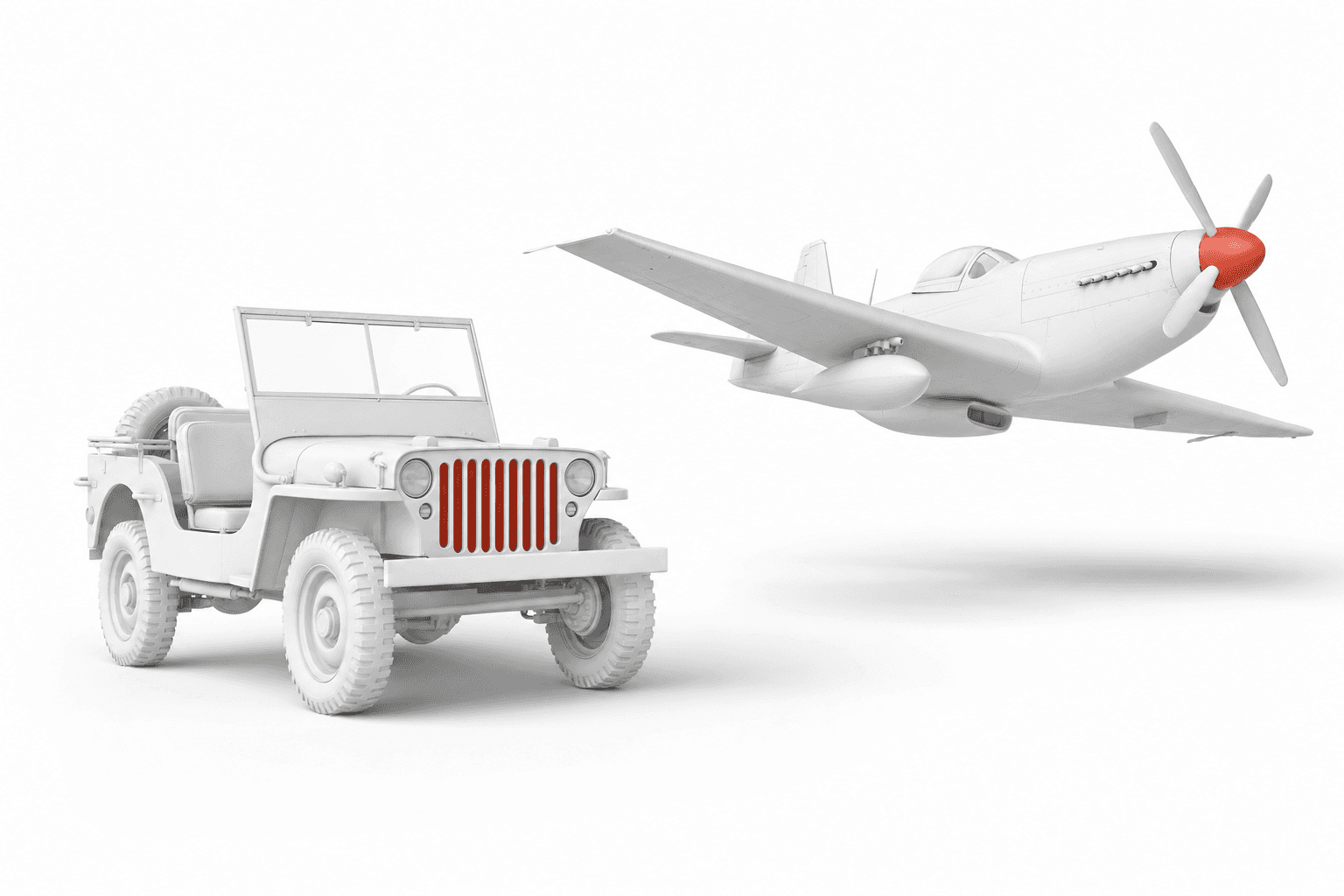
6. Liberty Ships (1941-1945)
The Allied war effort needed cargo ships faster than traditional shipyards could build them. Henry Kaiser’s shipyards on the West Coast adopted prefabrication and welding (instead of riveting) and drove the average build time for a Liberty Ship from 230 days down to 42 days. The most famous single build, the SS Robert E. Peary at Richmond Shipyard No. 2, was assembled in 4 days, 15 hours, and 29 minutes -- a publicity stunt, but a publicity stunt that demonstrated what the system was capable of.
Across the program, eighteen American shipyards built 2,710 Liberty Ships in under four years. The ships were ugly, slow, and built to a deliberately low quality target -- the design assumption was that a Liberty Ship only needed to survive a few wartime crossings to pay for itself. Many of them survived for decades.
The legacy: modular construction, prefabrication, and welded ship hulls became the global shipbuilding standard. Henry Kaiser’s organizational methods became the template for the postwar American industrial corporation.
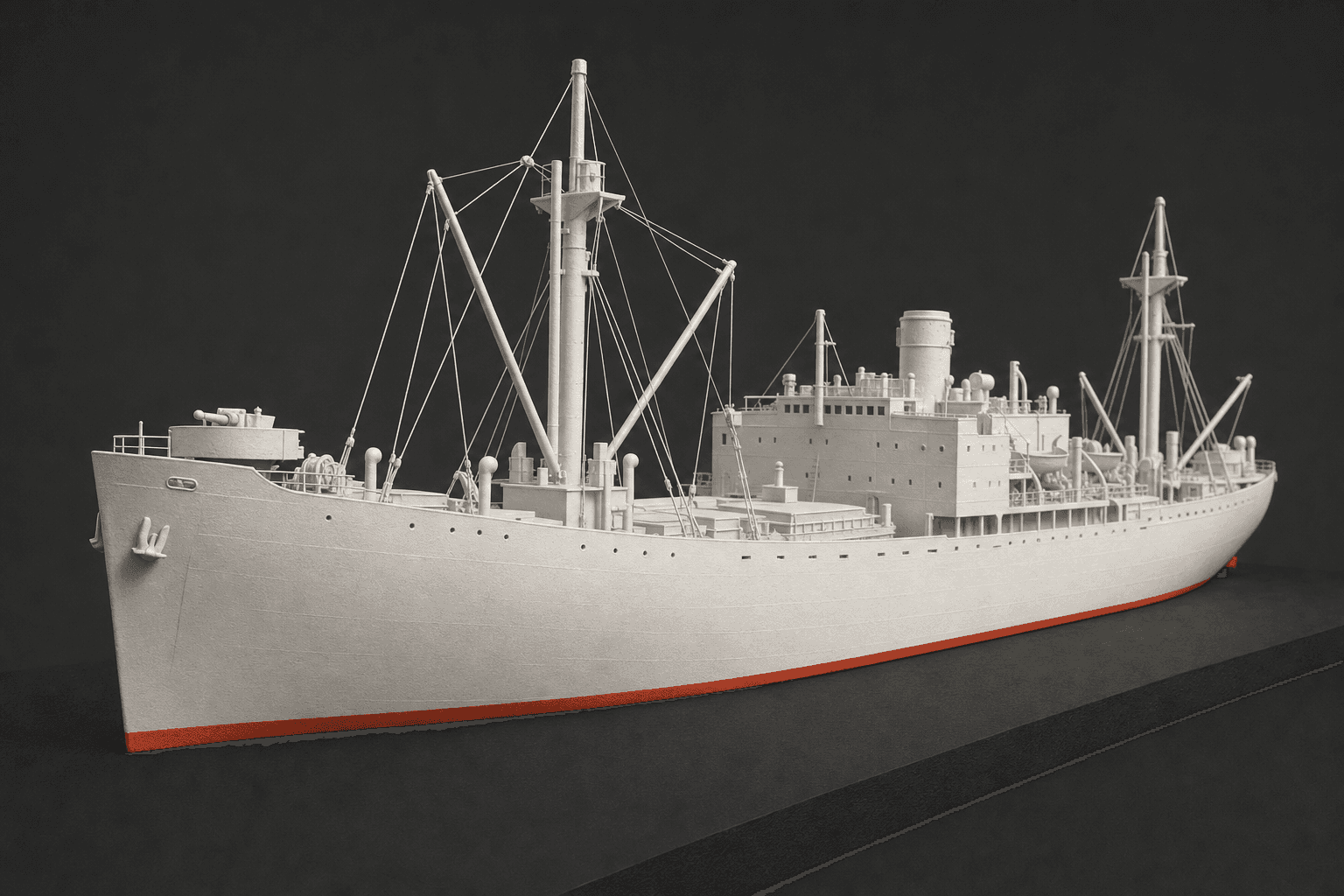
7. The Manhattan Project (1942-1945)
Roughly 130,000 people. Three production sites built from raw land at Oak Ridge, Hanford, and Los Alamos. The whole program cost about $30 billion in today's dollars -- which the AI infrastructure buildout now spends roughly every two weeks, a comparison I unpacked in my takeaways from the Berkeley Agentic AI Summit. Two parallel uranium enrichment technologies (gaseous diffusion and electromagnetic separation) and a plutonium reactor program developed simultaneously. A working device delivered roughly 30 months from program kickoff.
The Manhattan Project is the canonical example of parallel-paths NPI at industrial scale. Leslie Groves and Robert Oppenheimer ran a program that refused to bet on a single technical approach, built parallel production capacity for every leading candidate, and killed the losers late. The program institutionalized the idea that the cost of running multiple paths in parallel is small compared to the cost of betting on the wrong one.
The legacy: every modern crash program, from mRNA vaccines to lunar landers to hyperscale chip fabs, borrows the parallel-paths methodology that Groves and Oppenheimer formalized. The moral weight of the program is real and worth acknowledging, but the manufacturing playbook it produced is foundational.
8. Penicillin Mass Production (1941-1945)
Howard Florey and Ernst Chain demonstrated penicillin’s clinical potential in 1940, but production at the time was measured in milligrams. The drug was so scarce that doctors recovered it from patients’ urine to re-administer it. By the end of 1945, US manufacturers were producing 650 billion units per month. Pfizer alone, working in a converted Brooklyn ice plant, was producing more than half the global supply.
The breakthrough was deep-tank fermentation. Most pharmaceutical companies in 1941 grew penicillin in shallow trays. Pfizer’s chemical engineers, led by Jasper Kane, adapted submerged fermentation technology from citric acid production and scaled it to 7,500-gallon tanks. The process required oxygen agitation, sterile technique at industrial scale, and strain selection methodologies that did not previously exist in pharmaceutical manufacturing.
The legacy: the modern biotech industry, every large-scale fermentation product (insulin, monoclonal antibodies, mRNA), and the entire infrastructure of industrial-scale pharmaceutical production traces back to the wartime penicillin program.
9. Synthetic Rubber (1941-1944)
When Japan seized Southeast Asia in 1941 and 1942, the United States lost access to roughly 90 percent of its natural rubber supply. Rubber was used in tires, gas masks, hoses, gaskets, life rafts, aircraft components -- effectively everything required to fight a mechanized war. The US synthetic rubber program built 51 plants from scratch in three years, increased synthetic production from 8,000 tons in 1941 to over 800,000 tons in 1945, and developed the GR-S (government rubber-styrene) process that became the foundation of postwar synthetic rubber manufacturing worldwide.
The program required parallel coordination across competing chemical companies (Standard Oil, Goodyear, Firestone, Goodrich) under a Rubber Director appointed by Roosevelt. It also required massive investment in butadiene and styrene production capacity, neither of which existed at industrial scale before the war.
The legacy: the postwar petrochemical industry, the modern tire industry, and most of the synthetic polymers that define 20th-century materials science emerged from the wartime synthetic rubber program. The crash-program template -- competing companies coordinated under a national director -- has been copied for every subsequent strategic materials program.
10. F-117 Nighthawk (1978-1983)
In 1975, Lockheed’s Skunk Works analyzed Soviet air defense capabilities and concluded that conventional aircraft would not survive in contested airspace by the 1990s. The F-117 program began under Have Blue, a black-budget demonstrator, and entered full development in November 1978. The first production F-117 flew in June 1981. The aircraft achieved initial operational capability in October 1983 -- 31 months from contract to operational deployment for an aircraft that introduced an entirely new category of military hardware.
The Nighthawk required novel radar-absorbent materials, novel manufacturing processes for faceted geometry (curved stealth surfaces were not yet computable in the late 1970s), and a security compartmentalization regime that meant most of the supply chain did not know what they were building. The program was not publicly acknowledged until 1988.
The F-117 saw combat in Panama, Iraq, and Yugoslavia. It was retired in 2008. Its real legacy is not the airframes but the methodology -- the design tools, the materials processes, and the manufacturing discipline that Skunk Works built for the program flowed directly into the B-2, the F-22, and the F-35.
The legacy: every modern stealth aircraft is a descendant of the F-117 program. The same logic -- necessity collapsing timelines until a new way of building wins -- is unfolding today on the front line in Ukraine. The black-program management methodology developed at Lockheed in the late 1970s remains the template for sensitive military hardware development.
What These Programs Have in Common
Five themes recur across every entry, and they are worth naming.
First, an executive sponsor with the authority to clear bureaucratic obstacles. Roosevelt cleared rubber. Roosevelt cleared Manhattan. The British Air Ministry cleared the cavity magnetron’s transfer. The Navy cleared the Monitor in 101 days. The pattern is consistent: wartime NPI works because someone with real power eliminates the procedural friction that peacetime programs accept as immutable.
Second, parallel paths. Manhattan ran three. Synthetic rubber ran multiple chemistries across multiple companies. The Jeep program ran three manufacturers in parallel. None of these programs bet on a single architecture surviving qualification.
Third, vertical integration into the supply chain that didn’t exist. Penicillin required new fermentation capacity. The SR-71’s wartime predecessor (the U-2) and the F-117 required materials that had to be invented. The cavity magnetron required microwave-frequency manufacturing capability that did not exist in the United States in 1940.
Fourth, ruthless prioritization. Liberty Ships were built to a deliberately low quality target because they only needed to survive a few crossings. The Jeep was designed in 49 days because the Army would not accept a longer timeline. Wartime programs accept tradeoffs that peacetime programs spend years debating.
Fifth, and most underrated, the legacy compounds long after the war ends. Interchangeable parts powered the Industrial Revolution. The cavity magnetron put a microwave oven in every kitchen. The Manhattan Project’s parallel-paths methodology shows up in every modern crash program. Wartime NPI is the most consequential industrial activity human beings do, partly because the programs that win wars also reshape the peace.
The hardest lesson is that the conditions that produce these programs -- existential pressure, executive authority, ruthless prioritization, willingness to accept moral and material costs that peacetime societies reject -- are exactly the conditions modern industrial democracies are designed to avoid. That is the right tradeoff. But it does mean that operators in peacetime programs have to manufacture the urgency that wartime delivers for free. Every great peacetime program on the companion list to this one is, in some sense, a deliberate attempt to import wartime velocity into a world that has the luxury of rejecting it.
The companies that succeed are the ones that take the lesson seriously.
One more program that predates every entry on this list: Orban's great bombard, cast for Mehmed II in roughly three months for the 1453 siege of Constantinople. My colleague George Valcarcel tells that story, and what it says about early supplier involvement, in The Cannon Byzantium Didn't Buy.
Necessity is the mother of invention. The cliche is also the most durable observation in industrial history. The fastest, most consequential New Product Introduction programs in the historical record were not driven by markets. They were driven by existential pressure -- the kind of pressure that collapses bureaucratic timelines, dissolves committee reviews, and forces an entire society to accept that the program will ship or the country will lose.
What follows is our list of the ten greatest wartime NPI projects of all time. These are programs where the demands of conflict forced the introduction of products at velocities and scales that peacetime industry has never matched. Some of the products are morally complicated. All of the programs left a legacy that reshaped industries long after the wars ended.
These are listed chronologically.
1. Eli Whitney and Interchangeable Parts (1798-1809)
In 1798, Eli Whitney signed a contract with the US government to manufacture 10,000 muskets in two years. He did not deliver on time -- the actual program took roughly a decade -- but the manufacturing methodology he developed in the attempt is the foundation of everything that came after. Whitney built jigs, fixtures, and gauges that allowed unskilled labor to produce musket components with enough dimensional consistency that parts from different muskets could be interchanged.
Before Whitney, every musket was a hand-fitted bespoke object. After Whitney (and parallel work by Simeon North and the federal armories at Springfield and Harpers Ferry), military procurement was the proving ground for a manufacturing philosophy that eventually scaled into automobiles, appliances, and every mass-produced object on earth.
The legacy: interchangeable parts is the precondition for every other entry on this list, and for most of the peacetime list as well.
2. USS Monitor (1861-1862)
In October 1861, the Union Navy learned that the Confederacy was converting the captured frigate USS Merrimack into an ironclad warship that threatened to break the Union blockade. John Ericsson signed a contract to design and build a counter on October 4. The Monitor was launched on January 30, 1862. 101 days from contract to launch.
The ship was an engineering oddity -- a flat iron deck riding nearly flush with the waterline, with a single rotating turret carrying two 11-inch guns. Ericsson’s program ran across multiple subcontractors in New York, with the hull built at Continental Iron Works in Greenpoint and the turret machined at Novelty Iron Works. The ship arrived at Hampton Roads on March 8, hours after the CSS Virginia had sunk two Union frigates. The next morning, Monitor and Virginia fought to a draw, and the era of wooden warships ended.
The legacy: the Monitor’s turret, armor, and steam-driven systems became the blueprint for every battleship built over the next eighty years. The 101-day timeline remains a benchmark for crash naval programs.
3. The Jeep (1940-1941)
On July 11, 1940, the US Army issued a specification for a light reconnaissance vehicle and required prototypes within 49 days. American Bantam was the only company willing to attempt the timeline. Bantam delivered a running prototype on September 23, 1940 -- 49 days. The Army then handed the design to Willys-Overland and Ford to spread production risk, and the three companies collectively built more than 640,000 Jeeps during the war.
The Jeep program is one of the cleanest demonstrations in industrial history of how a forcing-function timeline -- “49 days or no contract” -- can produce a result that two-year peacetime programs cannot. The vehicle was designed for a specific battlefield mission, but its post-war legacy created the entire SUV and off-road category.
The legacy: the modern Jeep brand, the Land Rover, and every recreational off-road vehicle on the road today descend from a 49-day Army specification.
4. Radar and the Cavity Magnetron (1940-1943)
In September 1940, the Tizard Mission carried a small metal device from Britain to the United States. The cavity magnetron, developed by John Randall and Harry Boot at the University of Birmingham, generated microwave-frequency radio energy at power levels that made airborne and shipborne radar practical for the first time. The British handed the device to the Americans because Britain had no industrial capacity left to productionize it under the Blitz.
MIT’s Radiation Laboratory was stood up on October 12, 1940, with a small team and a mandate to productionize radar systems for the Allied war effort. By 1945, the Rad Lab had grown to nearly 4,000 staff, had developed roughly 100 different radar systems, and had productionized them through American industry at a scale that won the Battle of the Atlantic and made night bombing possible.
The legacy: the cavity magnetron is in every microwave oven on earth. The Rad Lab alumni founded the modern American electronics industry. Five Rad Lab veterans won Nobel Prizes.
5. North American P-51 Mustang (1940)
In April 1940, the British Purchasing Commission asked North American Aviation to license-build the Curtiss P-40 fighter for the Royal Air Force. NAA’s president, Dutch Kindelberger, made an audacious counter-offer: NAA would design and build a better fighter from scratch, in 120 days. The British accepted. The first NA-73X prototype rolled out 117 days after contract signing.
The original Mustang used an Allison V-1710 engine that performed poorly at high altitude. The aircraft became great when British engineers swapped in the Rolls-Royce Merlin engine in 1942 -- a redesign that Packard then productionized at scale in the United States. By the end of the war, more than 15,000 Mustangs had been built, and the long-range Mustang escort capability is widely credited with breaking the Luftwaffe over Germany.
The legacy: the 117-day prototype timeline remains the canonical example of crash-program aircraft development. The Merlin-engine swap is one of the most successful mid-program redesigns in aviation history.
6. Liberty Ships (1941-1945)
The Allied war effort needed cargo ships faster than traditional shipyards could build them. Henry Kaiser’s shipyards on the West Coast adopted prefabrication and welding (instead of riveting) and drove the average build time for a Liberty Ship from 230 days down to 42 days. The most famous single build, the SS Robert E. Peary at Richmond Shipyard No. 2, was assembled in 4 days, 15 hours, and 29 minutes -- a publicity stunt, but a publicity stunt that demonstrated what the system was capable of.
Across the program, eighteen American shipyards built 2,710 Liberty Ships in under four years. The ships were ugly, slow, and built to a deliberately low quality target -- the design assumption was that a Liberty Ship only needed to survive a few wartime crossings to pay for itself. Many of them survived for decades.
The legacy: modular construction, prefabrication, and welded ship hulls became the global shipbuilding standard. Henry Kaiser’s organizational methods became the template for the postwar American industrial corporation.
7. The Manhattan Project (1942-1945)
Roughly 130,000 people. Three production sites built from raw land at Oak Ridge, Hanford, and Los Alamos. The whole program cost about $30 billion in today's dollars -- which the AI infrastructure buildout now spends roughly every two weeks, a comparison I unpacked in my takeaways from the Berkeley Agentic AI Summit. Two parallel uranium enrichment technologies (gaseous diffusion and electromagnetic separation) and a plutonium reactor program developed simultaneously. A working device delivered roughly 30 months from program kickoff.
The Manhattan Project is the canonical example of parallel-paths NPI at industrial scale. Leslie Groves and Robert Oppenheimer ran a program that refused to bet on a single technical approach, built parallel production capacity for every leading candidate, and killed the losers late. The program institutionalized the idea that the cost of running multiple paths in parallel is small compared to the cost of betting on the wrong one.
The legacy: every modern crash program, from mRNA vaccines to lunar landers to hyperscale chip fabs, borrows the parallel-paths methodology that Groves and Oppenheimer formalized. The moral weight of the program is real and worth acknowledging, but the manufacturing playbook it produced is foundational.
8. Penicillin Mass Production (1941-1945)
Howard Florey and Ernst Chain demonstrated penicillin’s clinical potential in 1940, but production at the time was measured in milligrams. The drug was so scarce that doctors recovered it from patients’ urine to re-administer it. By the end of 1945, US manufacturers were producing 650 billion units per month. Pfizer alone, working in a converted Brooklyn ice plant, was producing more than half the global supply.
The breakthrough was deep-tank fermentation. Most pharmaceutical companies in 1941 grew penicillin in shallow trays. Pfizer’s chemical engineers, led by Jasper Kane, adapted submerged fermentation technology from citric acid production and scaled it to 7,500-gallon tanks. The process required oxygen agitation, sterile technique at industrial scale, and strain selection methodologies that did not previously exist in pharmaceutical manufacturing.
The legacy: the modern biotech industry, every large-scale fermentation product (insulin, monoclonal antibodies, mRNA), and the entire infrastructure of industrial-scale pharmaceutical production traces back to the wartime penicillin program.
9. Synthetic Rubber (1941-1944)
When Japan seized Southeast Asia in 1941 and 1942, the United States lost access to roughly 90 percent of its natural rubber supply. Rubber was used in tires, gas masks, hoses, gaskets, life rafts, aircraft components -- effectively everything required to fight a mechanized war. The US synthetic rubber program built 51 plants from scratch in three years, increased synthetic production from 8,000 tons in 1941 to over 800,000 tons in 1945, and developed the GR-S (government rubber-styrene) process that became the foundation of postwar synthetic rubber manufacturing worldwide.
The program required parallel coordination across competing chemical companies (Standard Oil, Goodyear, Firestone, Goodrich) under a Rubber Director appointed by Roosevelt. It also required massive investment in butadiene and styrene production capacity, neither of which existed at industrial scale before the war.
The legacy: the postwar petrochemical industry, the modern tire industry, and most of the synthetic polymers that define 20th-century materials science emerged from the wartime synthetic rubber program. The crash-program template -- competing companies coordinated under a national director -- has been copied for every subsequent strategic materials program.
10. F-117 Nighthawk (1978-1983)
In 1975, Lockheed’s Skunk Works analyzed Soviet air defense capabilities and concluded that conventional aircraft would not survive in contested airspace by the 1990s. The F-117 program began under Have Blue, a black-budget demonstrator, and entered full development in November 1978. The first production F-117 flew in June 1981. The aircraft achieved initial operational capability in October 1983 -- 31 months from contract to operational deployment for an aircraft that introduced an entirely new category of military hardware.
The Nighthawk required novel radar-absorbent materials, novel manufacturing processes for faceted geometry (curved stealth surfaces were not yet computable in the late 1970s), and a security compartmentalization regime that meant most of the supply chain did not know what they were building. The program was not publicly acknowledged until 1988.
The F-117 saw combat in Panama, Iraq, and Yugoslavia. It was retired in 2008. Its real legacy is not the airframes but the methodology -- the design tools, the materials processes, and the manufacturing discipline that Skunk Works built for the program flowed directly into the B-2, the F-22, and the F-35.
The legacy: every modern stealth aircraft is a descendant of the F-117 program. The same logic -- necessity collapsing timelines until a new way of building wins -- is unfolding today on the front line in Ukraine. The black-program management methodology developed at Lockheed in the late 1970s remains the template for sensitive military hardware development.
What These Programs Have in Common
Five themes recur across every entry, and they are worth naming.
First, an executive sponsor with the authority to clear bureaucratic obstacles. Roosevelt cleared rubber. Roosevelt cleared Manhattan. The British Air Ministry cleared the cavity magnetron’s transfer. The Navy cleared the Monitor in 101 days. The pattern is consistent: wartime NPI works because someone with real power eliminates the procedural friction that peacetime programs accept as immutable.
Second, parallel paths. Manhattan ran three. Synthetic rubber ran multiple chemistries across multiple companies. The Jeep program ran three manufacturers in parallel. None of these programs bet on a single architecture surviving qualification.
Third, vertical integration into the supply chain that didn’t exist. Penicillin required new fermentation capacity. The SR-71’s wartime predecessor (the U-2) and the F-117 required materials that had to be invented. The cavity magnetron required microwave-frequency manufacturing capability that did not exist in the United States in 1940.
Fourth, ruthless prioritization. Liberty Ships were built to a deliberately low quality target because they only needed to survive a few crossings. The Jeep was designed in 49 days because the Army would not accept a longer timeline. Wartime programs accept tradeoffs that peacetime programs spend years debating.
Fifth, and most underrated, the legacy compounds long after the war ends. Interchangeable parts powered the Industrial Revolution. The cavity magnetron put a microwave oven in every kitchen. The Manhattan Project’s parallel-paths methodology shows up in every modern crash program. Wartime NPI is the most consequential industrial activity human beings do, partly because the programs that win wars also reshape the peace.
The hardest lesson is that the conditions that produce these programs -- existential pressure, executive authority, ruthless prioritization, willingness to accept moral and material costs that peacetime societies reject -- are exactly the conditions modern industrial democracies are designed to avoid. That is the right tradeoff. But it does mean that operators in peacetime programs have to manufacture the urgency that wartime delivers for free. Every great peacetime program on the companion list to this one is, in some sense, a deliberate attempt to import wartime velocity into a world that has the luxury of rejecting it.
The companies that succeed are the ones that take the lesson seriously.
One more program that predates every entry on this list: Orban's great bombard, cast for Mehmed II in roughly three months for the 1453 siege of Constantinople. My colleague George Valcarcel tells that story, and what it says about early supplier involvement, in The Cannon Byzantium Didn't Buy.
Read more


Read more
Read more
Faster sourcing. Lower cost. Less chaos.
See how LightSource connects engineering, procurement, and suppliers in one operating system to help you launch faster at lower cost.
SOC 2
Kearney #1 2024
Gartner Cool Vendor
Procuretech 100
G2 Top Rated
Faster sourcing. Lower cost. Less chaos.
See how LightSource connects engineering, procurement, and suppliers in one operating system to help you launch faster at lower cost.
SOC 2
Kearney #1 2024
Gartner Cool Vendor
Procuretech 100
G2 Top Rated
Faster sourcing. Lower cost. Less chaos.
See how LightSource connects engineering, procurement, and suppliers in one operating system to help you launch faster at lower cost.
SOC 2
Kearney #1 2024
Gartner Cool Vendor
Procuretech 100
G2 Top Rated
Trusted by:
Trusted by:
Trusted by: