// IN THE NEWS

Nvidia Just Gave Traditional Automakers That Missed the Self-Driving Boom a New Way to Catch Up
The chipmaker’s new open model is meant to help automakers build self-driving systems—without starting from scratch.
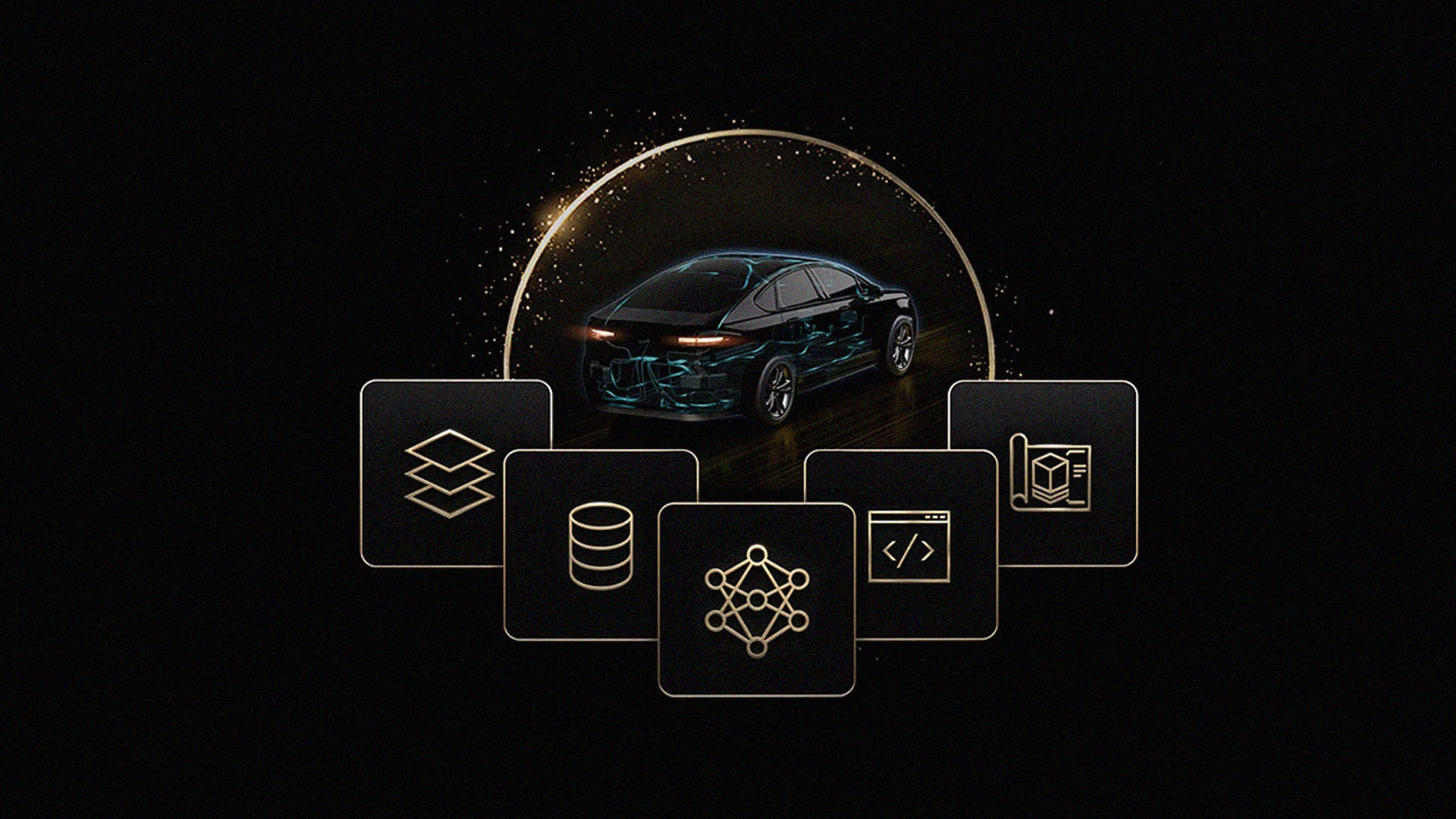
Nvidia is cementing its place in the autonomous vehicle industry.
Titled the Alpamayo 2 Super,the company’s newest software is part of its collection of open models, data sets, and tools for autonomous driving. Alpamayo, which was announced on Tuesday, is immediately available for commercial usage, as the company hopes to expand access, strengthen competition, and give developers greater control.
“Its permissive license allows developers to fine-tune the model, create derivatives, and retain control of their proprietary data and deployment strategies,” Marco Pavone, director of autonomous vehicle research at Nvidia, told Inc. “The goal is to accelerate open and transparent development across the AV ecosystem.”
Alpamayo 2 Super is available on Hugging Face, an AIcommunity that is a frequent collaborator with Nvidia. Earlier Alpamayo releases were initially introduced for research and development. They now can be optimized for efficient, real-time inference in production vehicles.
Nvidia confirmed to Inc. that the Alpamayo family has been downloaded more than 500,000 times and has attracted interest from automakers, suppliers, startups, researchers, and mobility companies.
“Downloads or experimentation should not be characterized as confirmed production deployment. Nvidia expects the first production vehicles using distilled Alpamayo-based reasoning models to begin arriving around late 2026 or early 2027,” said Pavone.
New software
However, the launch comes as autonomous vehicles and robotaxis continue to generate headlines. Companies like Waymo, Tesla, and Zoox have continued to run into safety and software issues.
In June, Waymo issued a voluntary software recall for over 3,800 fifth-generation vehicles after robotaxis entered closed freeway construction zones. The car company also faced backlash last year after a vehicle ran over and killed a cat in San Francisco.
It’s something Nvidia says it’s actively thinking about in development. “Safety must be established through the complete vehicle system and its validation process, not assumed from the release of a foundation model,” said Pavone. “Alpamayo 2 Super is a large teacher and developer model; it is not designed to run directly in a vehicle. Developers must distill it into smaller models, integrate those models within a complete autonomy stack, and validate the resulting system against defined operating domains, and latency requirements.”
Spencer Penn, CEO of LightSource and a former product manager at Waymo, told Inc. that Nvidia is stepping into a gap between traditional automakers and companies already dominating the AV spaceafter years of trial and error. “It’s worth remembering that companies like Tesla and Waymo had to build their entire stacks from the ground up.”
Penn, who was also previously at Tesla, sees the new product as an opportunity for expanded learning for research and development in the AV industry.
“They’re offering a common foundation for everyone who isn’t Waymo or Tesla: an open reasoning model that can explain its driving decisions, plus the data, auto-labeling, and simulation tooling around it. It’s a teacher model rather than a finished driver—you distill it into something that runs in your own vehicle. The companies this helps most are the ones who missed the first wave.”
The Alpamayo open platform has chain-of-causation explanations set to help safety teams and regulators examine why a system made a particular decision.
It’s part of the company’s push to give the industry access to safety-relevant capabilities that were not previously broadly available. “Alpamayo should be viewed as a contribution to a safer and more transparent autonomous vehicle industry,” Pavone told Inc.
Nvidia did not disclose to Inc. if Alpamayo 2 Super has been adopted by major AV companies such as Waymo, Tesla, or Zoox. However, Penn told Inc. that the major AV companies might not be looking into Alpamayo since Tesla designs its own chips and Waymo builds its hardware and software together.
“Nvidia doesn’t require their participation to build a very large business here— supplying the dozens of automakers and operators trying to catch up may be the bigger market anyway.”
A correction was made on August 5, 2026: An earlier version of this article attributed quotes to Matt Cragun, the director of product for autonomous vehicles at Nvidia, instead of Marco Pavone, the director of autonomous vehicle research at Nvidia.
See this sourcing workflow in practice.
LightSource is the AI-native sourcing platform for direct materials. See it on your own parts and suppliers.