
Let’s say you’re the procurement lead at a QSR chain with 2,000 locations. You’re buying 40 million pounds of chicken breast annually. Your supplier just sent a price increase notice -- 8% across the board, effective next quarter, citing “market conditions.”
You have two options. Accept the increase and watch your food cost percentage creep from 27% to 29%. Or pull up your should-cost model, decompose the supplier’s price into its constituent parts -- live bird cost, processing yield, cold chain logistics, packaging, margin -- and have a conversation grounded in data rather than assertions.
If you’ve read our earlier posts on should-cost modeling and should-cost for consumer electronics, the discipline is familiar: build an independent estimate of what something should cost based on its inputs, then use that estimate as a negotiation benchmark. The concept is the same. But food changes the math in ways that matter.
Why food is a different animal
In consumer electronics, the bill of materials is relatively stable. A capacitor’s price might shift 5-10% in a quarter. A stamped metal bracket holds its cost for months. You build a should-cost model once, update it quarterly, and it stays useful.
Food doesn’t work that way. A food BOM has four cost clocks running simultaneously, and none of them tick at the same speed.
The commodity clock. Corn, soy, wheat, chicken, beef, dairy -- the raw materials that make up 60% to 80% of your direct material costs trade on global commodity markets. Soybean oil can swing 30% in a quarter. USDA boneless skinless chicken breast spot prices can move 10-15% in a month. Your should-cost model needs a live feed, not a quarterly refresh.
The shelf-life clock. A resistor sits on a shelf for two years. A case of chicken breast gives you seven days, maybe ten in modified atmosphere packaging. Fresh produce, bakery, and dairy punish forecast error quickly -- excess inventory doesn’t tie up cash, it becomes trash. A five-day shelf-life item can be more expensive than a ten-day item even if the invoice price is lower, once you account for waste.
The promotion clock. A limited-time chicken sandwich promotion can compress a year of demand into eight weeks, changing manufacturing line scheduling, raw material purchasing, distribution slotting, and restaurant waste. The regular commodity market may be stable while your specific fillet spec is tight because every QSR chain in the country is running a chicken promotion simultaneously.
The food safety clock. Products must meet FSMA, HACCP, allergen, traceability, and temperature requirements -- and those requirements add real cost. A lower price is not a saving if it increases recall risk, restaurant disruption, or brand damage. The cheapest fillet is not cheap if it cannot ship during the promotion.
Consumer electronics buyers worry about obsolescence and component allocation. Food buyers worry about spoilage, avian flu, harvest gaps, and whether a truck held temperature through a snowstorm.
Anatomy of a food should-cost: the chicken sandwich
The chicken sandwich is the most competitive menu item in American QSR right now -- every chain from Chick-fil-A to Popeyes to McDonald’s is fighting over it. Let’s build a should-cost model for one.
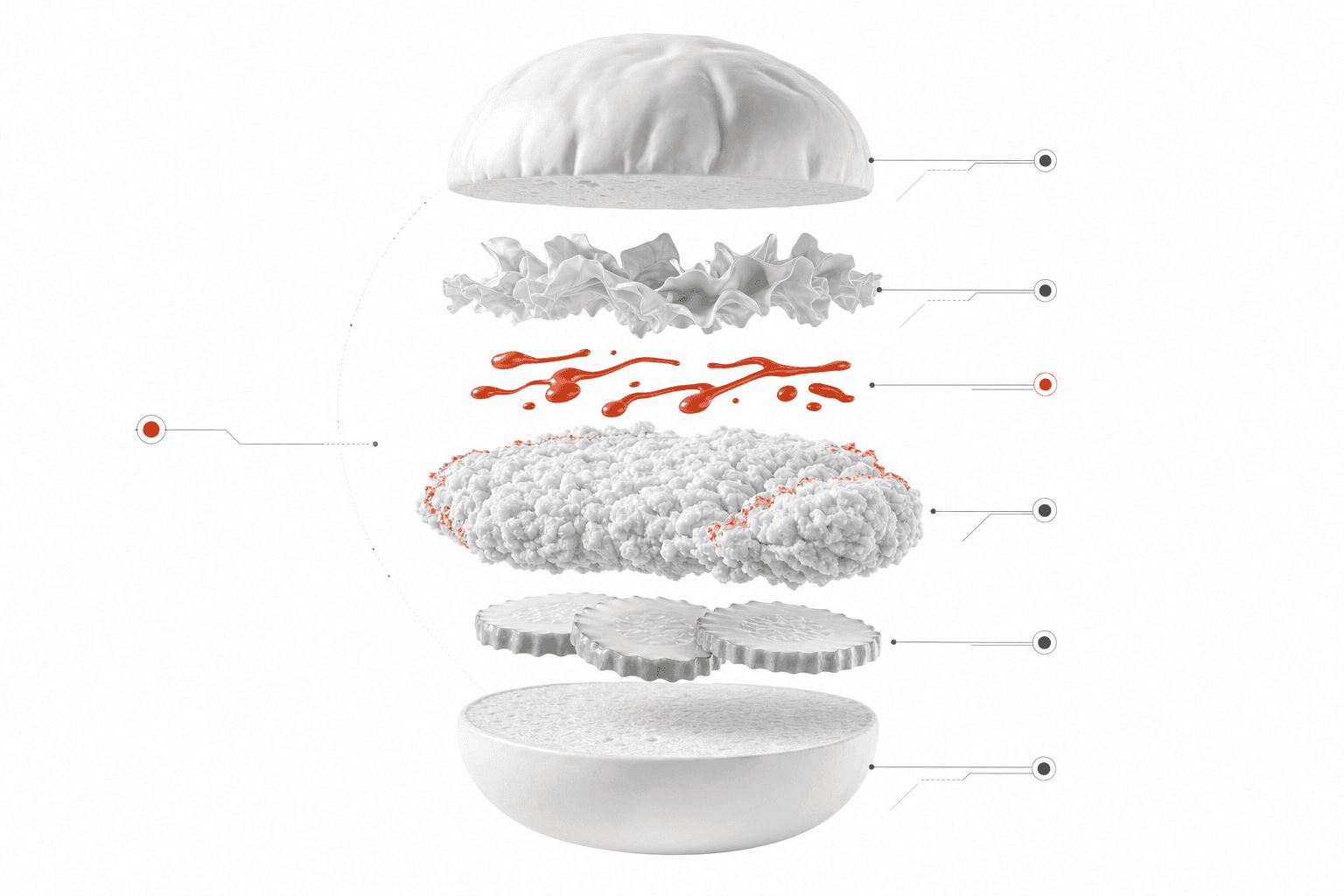
A chicken sandwich that sells for $5.49 at a QSR counter has a target food cost of roughly 28%, or about $1.54 in ingredients. The chicken fillet alone is roughly 60-65% of that material cost, so the model needs to go deepest there.
Breaking down the delivered fillet
Cost layer | Share of delivered cost | $/lb | What drives it |
|---|---|---|---|
Live bird / raw breast input | 52% | $1.66 | Corn and soy feed prices (corn = 60% of feed ration), flock genetics, grow-out time |
Deboning, trimming, yield loss | 13% | $0.42 | Whole-bird-to-breast yield runs 22-25%; varies by flock age and line speed |
Marination, breading, seasoning | 8% | $0.26 | Brine injection, spice blend, functional ingredients |
Plant labor and overhead | 10% | $0.32 | Line speed, sanitation downtime, shift scheduling |
Packaging and case materials | 4% | $0.13 | IQF poly bag, corrugated case, pallet |
QA, food safety, testing | 3% | $0.10 | Pathogen controls, hold-and-release, documentation |
Cold chain logistics | 5% | $0.16 | Refrigerated truck, warehouse, fuel surcharge |
Processor margin | 5% | $0.16 | Risk, service, capacity, working capital |
Delivered fillet | 100% | $3.20/lb |
This decomposition gives the buyer a fact base. If the commodity index for breast meat falls 10%, and the raw input is 52% of delivered cost, the expected fillet reduction is about 5.2% -- roughly $0.17/lb, not the $0.32/lb a naive model would suggest. On a chain selling 100 million sandwiches a year at 4.5 ounces per sandwich, that $0.17/lb is about $4.8 million.
But the model also reveals where a supplier’s price increase might be legitimate. A tighter fillet size spec -- say, 4.5 oz +/- 0.25 oz instead of +/- 0.5 oz -- reduces usable output per bird because the processor must sort more product away from your program. The supplier’s cost genuinely went up even if the breast market is flat.
That is a core food lesson: spec discipline can save money, and spec rigidity can cost money.
The complete sandwich
Component | Cost per sandwich | Key driver |
|---|---|---|
Chicken fillet (4.5 oz) | $0.90 | Commodity, yield, spec |
Brioche-style bun | $0.24 | Wheat flour, bakery conversion |
Pickles (0.6 oz) | $0.05 | Cucumber, vinegar |
Sauce (0.5 oz) | $0.08 | Soybean oil, eggs, spice blend |
Fryer oil absorption (0.25 oz) | $0.02 | Soybean/canola markets, filtration |
Wrapper/clamshell | $0.07 | Paperboard, grease-resistant coating |
Restaurant waste allowance (4%) | $0.05 | Forecast accuracy, shelf life, portioning |
Total food + packaging | $1.41 | 25.7% of $5.49 menu price |
That 25.7% food cost looks healthy against the QSR benchmark of 22-28%. But the margin lives in the details. A 2% swing in chicken price, a 1-point increase in waste, and a bad romaine season can push food cost to 28-29% in a single quarter. On 2,000 locations, every percentage point is worth roughly $4 million annually.
The distributor layer most models miss
Here’s an angle that separates good food should-cost models from naive ones: distributor economics.
Most restaurant systems depend on distributors -- Sysco, US Foods, Performance Food Group, Gordon Food Service -- to get product into restaurants at the right temperature, on the right day, in the right case quantity. Sysco alone reported $20.7 billion in quarterly sales in Q1 fiscal 2026, operating in a roughly $370 billion U.S. foodservice market where it holds about 17% share.
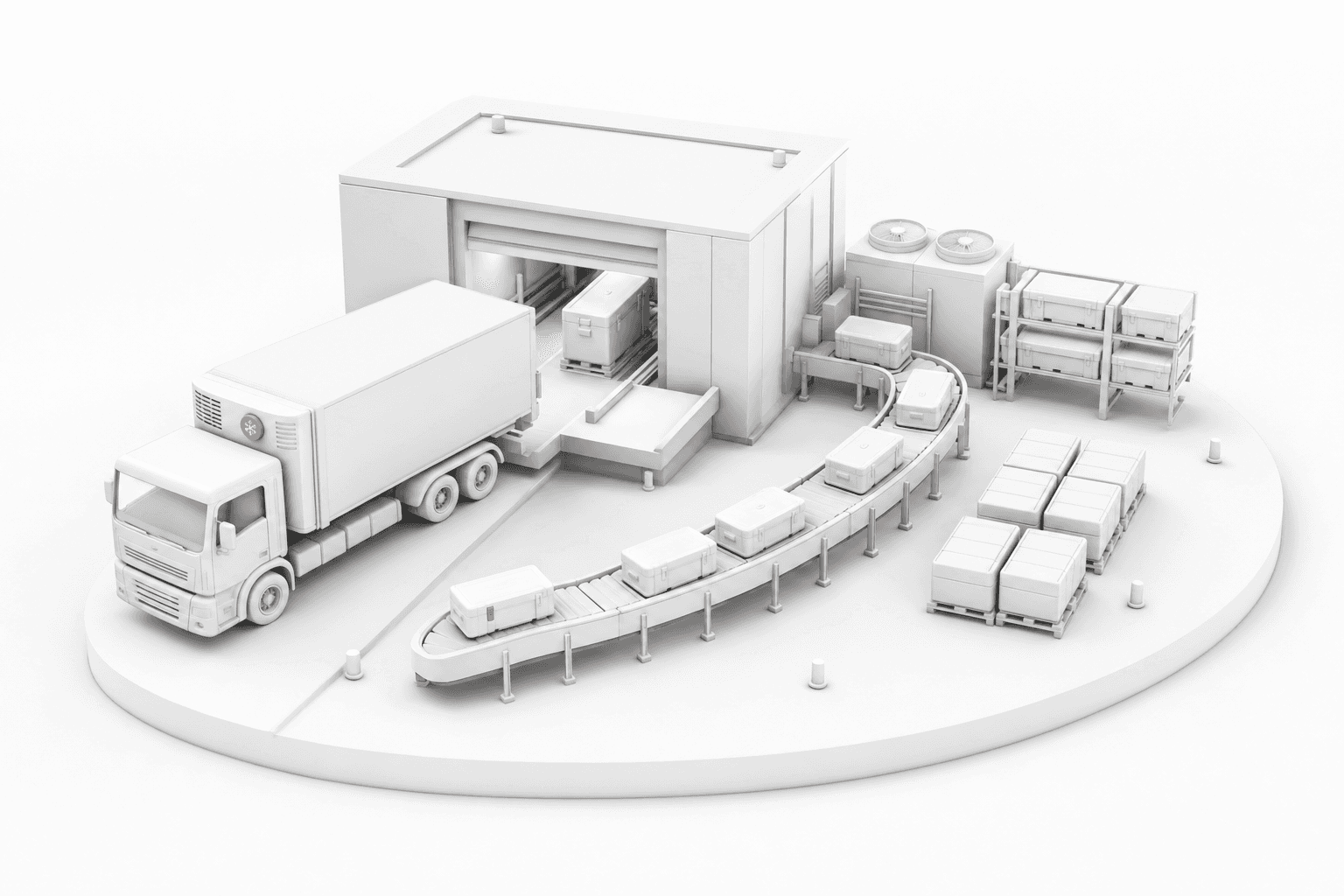
Foodservice distribution is not just freight. It’s a bundle of working capital, storage, pick-pack, temperature control, shrink, delivery density, credit risk, and emergency fill-in service. A restaurant operator that treats distributor markup as a black box misses a major cost driver.
The should-cost model needs to separate supplier cost from distributor cost, with at least seven drivers:
Cases per delivery -- more cases per stop lowers cost per case
Route density -- dense metro routes vs. rural small drops
Temperature zones -- frozen, refrigerated, and dry storage have different costs
Cube and weight -- a light, bulky case costs more to move than the invoice suggests
Pick complexity -- slow-moving SKUs, split cases, special handling
Shrink and damage -- fresh produce and fragile packaging carry real loss rates
Working capital and credit -- payment terms and inventory ownership are part of the fee
A percent-of-product markup can hide bad incentives. If the distributor earns a percentage of product cost, commodity inflation increases distributor dollars even when the handling work is unchanged. A cost-plus-per-case or activity-based structure can be cleaner for high-volume chain programs.
Recipe flexibility: the cost lever hardware doesn’t have
You can’t swap a 10K-ohm resistor for a 12K-ohm resistor without redesigning the circuit. But you can swap canola oil for soybean oil in a fryer with minimal impact on the end product.
McKinsey’s research on food sourcing found that companies with the systems to switch between recipes -- changing formulations based on ingredient price and availability -- captured significantly more savings. Their data shows food companies using a comprehensive sourcing approach save 2-6% on direct material costs and 8-22% on conversion costs. For every 1% improvement in direct material cost, net margin improves 200-300 basis points.
In practice, this looks like:
Cooking oil substitution. Soybean oil, canola oil, and palm oil are functionally interchangeable in most deep-frying applications. When soybean oil spikes 25%, a chain with pre-qualified alternatives can switch within weeks.
Protein grade switching. A spec rewritten from “USDA Grade A boneless skinless breast, 5.5 oz” to “boneless skinless breast, 5.0-6.0 oz, minimum 74% lean, moisture < 80%” opens the door to more suppliers and lower-cost sources that still meet functional requirements.
Seasonal produce planning. Romaine lettuce from Salinas Valley costs $18-22/case in summer and $35-45/case during winter shortages. A chain that qualifies iceberg or mixed greens as an alternative avoids the seasonal premium entirely.
The should-cost model’s job is to make these substitutions visible and quantifiable -- pre-defined triggers, not reactive scrambles. When your model tracks the economics of three qualified oils and two protein specs, your procurement team is executing pre-planned switches, not absorbing price spikes.
Commodity hedging meets should-cost
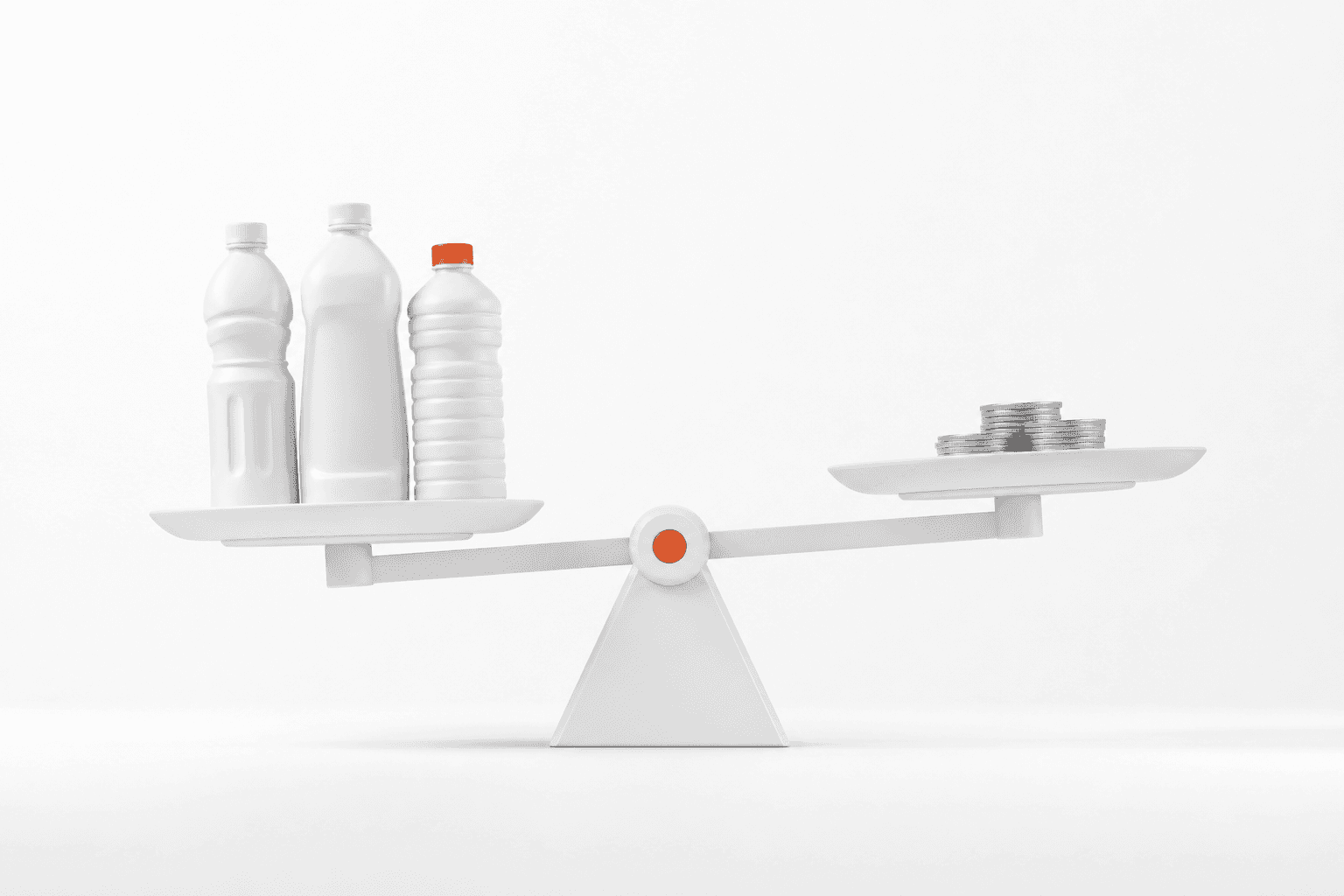
Large food buyers don’t just model costs -- they hedge them. Major chains typically lock in 50-80% of their commodity exposure 3-6 months forward using futures contracts, forward purchase agreements, and index-based pricing formulas.
The should-cost model tells them what to hedge and at what price level. Without the model, hedging is guesswork -- you’re locking in prices without knowing whether they represent fair value for the finished product.
A QSR chain’s model shows that corn drives 60% of chicken cost. Corn futures for Q3 are trading at $4.80/bushel. The model says that at $4.80 corn, boneless breast should cost $1.55-1.65/lb. The team locks in forward contracts at that level -- effectively locking in a should-cost for the next 6-9 months.
This is where food procurement borrows from financial markets in a way that direct materials sourcing for manufactured goods typically doesn’t. A procurement leader buying stamped steel brackets doesn’t hedge hot-rolled coil futures. A procurement leader buying chicken is, implicitly or explicitly, taking a position on corn and soy.
How the big buyers do it
The companies that buy food at the largest scale have built procurement machines that would be familiar to anyone who’s worked in automotive or aerospace sourcing. The tools are different, but the discipline is the same.
RSCS (Restaurant Supply Chain Solutions) manages $5.8 billion in annual food and packaging purchases for Yum! Brands -- KFC, Pizza Hut, and Taco Bell across 35,000+ restaurants. Their model is a purchasing cooperative: they aggregate demand across all three brands, negotiate volume commitments, and use proprietary cost models to benchmark every category. When your single chicken tender supplier knows you represent 35,000 restaurants, the negotiation dynamic shifts. But volume alone isn’t the lever -- RSCS’s value is in the cost transparency they bring. They can decompose a supplier’s price increase into its components and push back on the pieces that don’t align with market data.
McDonald’s and HAVI operate the most sophisticated food supply chain in the world. McDonald’s buys roughly 2% of all beef produced in the United States. Their supply chain partner HAVI manages logistics and procurement coordination across 13,000+ U.S. locations. The negotiation framework is open-book -- suppliers share cost structures, McDonald’s shares demand forecasts. When Ray Kroc’s original potato supplier J.R. Simplot Company is still supplying french fries 70 years later, the relationship has evolved well past three bids and a buy.
Chipotle accepts a deliberately higher cost structure -- food cost runs 29-31% versus the QSR average of 22-28%. They sourced 47 million pounds of local produce in 2024 and hold 100% of U.S. suppliers to their Food with Integrity standards. Their should-cost model has to account for a variable that McDonald’s doesn’t: the cost premium of sourcing from smaller, local suppliers versus industrial-scale producers, and whether that premium is justified by the brand value it creates.
What changes by food category
Different food categories need different should-cost emphasis. The right model follows the physics of the category.
Category | Primary cost drivers | Common modeling mistake |
|---|---|---|
Poultry | Feed (corn/soy), bird size, breast yield, processing labor | Treating finished fillets as a direct commodity pass-through |
Beef | Cattle cycle, cutout values, trim markets, grind mix | Ignoring carcass balance and byproduct economics |
Dairy | Milk class pricing, butterfat, cheese block/barrel markets | Missing inventory lag and yield by fat/protein content |
Bakery | Flour, yeast, sugar, labor, line speed, freshness | Underestimating stale returns and regional plant constraints |
Produce | Weather, harvest labor, field yield, cooling, shelf life | Comparing case price without usable yield and waste |
Sauces | Oils, tomato paste, spices, packaging, allergen controls | Modeling formula cost but not batching and changeover time |
Frying oils | Soybean/canola markets, filtration, usage rate, disposal | Looking only at purchase price instead of oil life per fryer |
Packaging | Resin, paper, corrugate, tooling, print, freight cube | Ignoring how packaging affects shelf life and damage rates |
A tomato is not a sauce pouch. A live bird is not a frozen fillet. Each has its own yield curve, shelf-life profile, capacity constraint, and risk.
Food vs. consumer electronics: the comparison
For teams coming from a manufacturing should-cost background, here’s how the two worlds compare:
Dimension | Consumer electronics | Food |
|---|---|---|
Primary cost driver | Component prices (semiconductors, passives) | Commodity prices (corn, soy, protein) |
Price update frequency | Monthly to quarterly | Daily to weekly |
Yield predictability | 95%+ standard | 80-92%, varies by biology |
Specification type | Dimensional tolerances, electrical specs | Sensory + food safety |
Substitution flexibility | Very low (form-fit-function locked) | Moderate to high (recipe reformulation) |
Shelf life of inputs | Months to years | Days to weeks |
Key external index | Semiconductor pricing databases | USDA reports, CME futures |
Disruption risk | Fab capacity, single-source ICs | Weather, disease, trade policy |
Hidden cost pool | Tooling amortization, NRE | Distributor fees, waste/spoilage |
Where LightSource fits
LightSource was built for exactly this kind of cost intelligence -- connecting procurement teams with live cost data, normalizing supplier bids against should-cost benchmarks, and surfacing pricing anomalies. For food companies running NPI on new menu items, the ability to model ingredient costs before committing to a recipe -- and to re-quote alternatives in minutes rather than weeks -- is the difference between launching a profitable product and launching a margin problem.
Sources
McKinsey: Recipe for success for sourcing in the food industry -- Food companies save 2-6% on direct materials and 8-22% on conversion costs through advanced sourcing practices
RSCS - Restaurant Supply Chain Solutions -- Yum! Brands’ $5.8B purchasing cooperative serving 35,000+ KFC, Pizza Hut, and Taco Bell restaurants
Sysco Q1 FY2026 Results -- $20.7B quarterly revenue, 18.5% gross margin in the $370B U.S. foodservice market
Chipotle 2024 Sustainability Report -- 47 million pounds of locally sourced produce, Food with Integrity standards
USDA APHIS: Avian Influenza Detections -- Tracking commercial flock losses and supply chain impact
National Restaurant Association: Food Costs -- Industry food cost benchmarks and trends
Food Industry Executive: Economic Considerations for 2026 -- Raw material volatility increased 35-50% over the past decade
USDA ERS: Poultry and Eggs Market Information -- Breast meat pricing, feed cost data, and supply trends
McDonald’s Food Quality and Sourcing -- Supply chain approach and supplier relationship model
Frequently Asked Questions
What is should-cost modeling in the food industry?
Should-cost modeling in food estimates what an ingredient or finished food product should cost based on its constituent inputs -- raw commodity prices, processing yield, labor, packaging, food safety testing, cold chain logistics, distributor fees, waste, and supplier margin. It gives procurement teams a data-backed benchmark to evaluate supplier pricing rather than relying solely on competitive bids or last year’s contract.
How does food should-cost differ from manufacturing should-cost?
The biggest differences are update frequency and input volatility. In manufacturing, component prices shift monthly or quarterly. In food, commodity prices can move daily, and raw materials like corn, soy, and proteins trade on exchanges that set new prices every trading day. Food models also need to account for biological yield variability, perishability, recipe substitution options, and distributor economics -- none of which exist in the same form in hardware sourcing.
What food cost percentage should a QSR restaurant target?
Most QSR concepts target 22-28% of menu price, with prime cost (food plus labor) between 55-65% of revenue. Chains with premium positioning like Chipotle deliberately run 29-31%. Anything above 65% prime cost typically signals margin pressure requiring menu repricing, supplier renegotiation, or operational improvements in waste and portioning.
How do large restaurant chains hedge food costs?
Major chains hedge 50-80% of commodity exposure 3-6 months forward using futures contracts for exchange-traded commodities, forward purchase agreements with suppliers, and index-based pricing formulas. The should-cost model informs the hedging strategy by identifying which cost components are most volatile and at what price levels hedging becomes attractive.
Why should distributor costs be modeled separately from supplier costs?
Foodservice distributors like Sysco and US Foods provide a bundle of services -- warehousing, temperature-controlled storage, pick-pack, delivery, credit, and emergency supply -- that add 15-25% to the delivered cost. A percent-of-product markup can mask cost inefficiencies. Modeling distributor costs by activity (cases per stop, route density, temperature zones, drop size) reveals where the real cost drivers are and whether the fee structure aligns with the actual service provided.
Can recipe flexibility reduce food procurement costs?
McKinsey’s research found that food companies with systems to switch between recipes -- swapping ingredients based on price and availability -- captured 2-6% savings on direct materials. In practice, this means pre-qualifying alternative cooking oils, protein specifications, and seasonal produce substitutes so the procurement team can execute switches when economics justify it. A chain with three qualified frying oils and two protein specs has built-in cost flexibility that a chain locked to a single ingredient spec does not.
Let’s say you’re the procurement lead at a QSR chain with 2,000 locations. You’re buying 40 million pounds of chicken breast annually. Your supplier just sent a price increase notice -- 8% across the board, effective next quarter, citing “market conditions.”
You have two options. Accept the increase and watch your food cost percentage creep from 27% to 29%. Or pull up your should-cost model, decompose the supplier’s price into its constituent parts -- live bird cost, processing yield, cold chain logistics, packaging, margin -- and have a conversation grounded in data rather than assertions.
If you’ve read our earlier posts on should-cost modeling and should-cost for consumer electronics, the discipline is familiar: build an independent estimate of what something should cost based on its inputs, then use that estimate as a negotiation benchmark. The concept is the same. But food changes the math in ways that matter.
Why food is a different animal
In consumer electronics, the bill of materials is relatively stable. A capacitor’s price might shift 5-10% in a quarter. A stamped metal bracket holds its cost for months. You build a should-cost model once, update it quarterly, and it stays useful.
Food doesn’t work that way. A food BOM has four cost clocks running simultaneously, and none of them tick at the same speed.
The commodity clock. Corn, soy, wheat, chicken, beef, dairy -- the raw materials that make up 60% to 80% of your direct material costs trade on global commodity markets. Soybean oil can swing 30% in a quarter. USDA boneless skinless chicken breast spot prices can move 10-15% in a month. Your should-cost model needs a live feed, not a quarterly refresh.
The shelf-life clock. A resistor sits on a shelf for two years. A case of chicken breast gives you seven days, maybe ten in modified atmosphere packaging. Fresh produce, bakery, and dairy punish forecast error quickly -- excess inventory doesn’t tie up cash, it becomes trash. A five-day shelf-life item can be more expensive than a ten-day item even if the invoice price is lower, once you account for waste.
The promotion clock. A limited-time chicken sandwich promotion can compress a year of demand into eight weeks, changing manufacturing line scheduling, raw material purchasing, distribution slotting, and restaurant waste. The regular commodity market may be stable while your specific fillet spec is tight because every QSR chain in the country is running a chicken promotion simultaneously.
The food safety clock. Products must meet FSMA, HACCP, allergen, traceability, and temperature requirements -- and those requirements add real cost. A lower price is not a saving if it increases recall risk, restaurant disruption, or brand damage. The cheapest fillet is not cheap if it cannot ship during the promotion.
Consumer electronics buyers worry about obsolescence and component allocation. Food buyers worry about spoilage, avian flu, harvest gaps, and whether a truck held temperature through a snowstorm.
Anatomy of a food should-cost: the chicken sandwich
The chicken sandwich is the most competitive menu item in American QSR right now -- every chain from Chick-fil-A to Popeyes to McDonald’s is fighting over it. Let’s build a should-cost model for one.
A chicken sandwich that sells for $5.49 at a QSR counter has a target food cost of roughly 28%, or about $1.54 in ingredients. The chicken fillet alone is roughly 60-65% of that material cost, so the model needs to go deepest there.
Breaking down the delivered fillet
Cost layer | Share of delivered cost | $/lb | What drives it |
|---|---|---|---|
Live bird / raw breast input | 52% | $1.66 | Corn and soy feed prices (corn = 60% of feed ration), flock genetics, grow-out time |
Deboning, trimming, yield loss | 13% | $0.42 | Whole-bird-to-breast yield runs 22-25%; varies by flock age and line speed |
Marination, breading, seasoning | 8% | $0.26 | Brine injection, spice blend, functional ingredients |
Plant labor and overhead | 10% | $0.32 | Line speed, sanitation downtime, shift scheduling |
Packaging and case materials | 4% | $0.13 | IQF poly bag, corrugated case, pallet |
QA, food safety, testing | 3% | $0.10 | Pathogen controls, hold-and-release, documentation |
Cold chain logistics | 5% | $0.16 | Refrigerated truck, warehouse, fuel surcharge |
Processor margin | 5% | $0.16 | Risk, service, capacity, working capital |
Delivered fillet | 100% | $3.20/lb |
This decomposition gives the buyer a fact base. If the commodity index for breast meat falls 10%, and the raw input is 52% of delivered cost, the expected fillet reduction is about 5.2% -- roughly $0.17/lb, not the $0.32/lb a naive model would suggest. On a chain selling 100 million sandwiches a year at 4.5 ounces per sandwich, that $0.17/lb is about $4.8 million.
But the model also reveals where a supplier’s price increase might be legitimate. A tighter fillet size spec -- say, 4.5 oz +/- 0.25 oz instead of +/- 0.5 oz -- reduces usable output per bird because the processor must sort more product away from your program. The supplier’s cost genuinely went up even if the breast market is flat.
That is a core food lesson: spec discipline can save money, and spec rigidity can cost money.
The complete sandwich
Component | Cost per sandwich | Key driver |
|---|---|---|
Chicken fillet (4.5 oz) | $0.90 | Commodity, yield, spec |
Brioche-style bun | $0.24 | Wheat flour, bakery conversion |
Pickles (0.6 oz) | $0.05 | Cucumber, vinegar |
Sauce (0.5 oz) | $0.08 | Soybean oil, eggs, spice blend |
Fryer oil absorption (0.25 oz) | $0.02 | Soybean/canola markets, filtration |
Wrapper/clamshell | $0.07 | Paperboard, grease-resistant coating |
Restaurant waste allowance (4%) | $0.05 | Forecast accuracy, shelf life, portioning |
Total food + packaging | $1.41 | 25.7% of $5.49 menu price |
That 25.7% food cost looks healthy against the QSR benchmark of 22-28%. But the margin lives in the details. A 2% swing in chicken price, a 1-point increase in waste, and a bad romaine season can push food cost to 28-29% in a single quarter. On 2,000 locations, every percentage point is worth roughly $4 million annually.
The distributor layer most models miss
Here’s an angle that separates good food should-cost models from naive ones: distributor economics.
Most restaurant systems depend on distributors -- Sysco, US Foods, Performance Food Group, Gordon Food Service -- to get product into restaurants at the right temperature, on the right day, in the right case quantity. Sysco alone reported $20.7 billion in quarterly sales in Q1 fiscal 2026, operating in a roughly $370 billion U.S. foodservice market where it holds about 17% share.
Foodservice distribution is not just freight. It’s a bundle of working capital, storage, pick-pack, temperature control, shrink, delivery density, credit risk, and emergency fill-in service. A restaurant operator that treats distributor markup as a black box misses a major cost driver.
The should-cost model needs to separate supplier cost from distributor cost, with at least seven drivers:
Cases per delivery -- more cases per stop lowers cost per case
Route density -- dense metro routes vs. rural small drops
Temperature zones -- frozen, refrigerated, and dry storage have different costs
Cube and weight -- a light, bulky case costs more to move than the invoice suggests
Pick complexity -- slow-moving SKUs, split cases, special handling
Shrink and damage -- fresh produce and fragile packaging carry real loss rates
Working capital and credit -- payment terms and inventory ownership are part of the fee
A percent-of-product markup can hide bad incentives. If the distributor earns a percentage of product cost, commodity inflation increases distributor dollars even when the handling work is unchanged. A cost-plus-per-case or activity-based structure can be cleaner for high-volume chain programs.
Recipe flexibility: the cost lever hardware doesn’t have
You can’t swap a 10K-ohm resistor for a 12K-ohm resistor without redesigning the circuit. But you can swap canola oil for soybean oil in a fryer with minimal impact on the end product.
McKinsey’s research on food sourcing found that companies with the systems to switch between recipes -- changing formulations based on ingredient price and availability -- captured significantly more savings. Their data shows food companies using a comprehensive sourcing approach save 2-6% on direct material costs and 8-22% on conversion costs. For every 1% improvement in direct material cost, net margin improves 200-300 basis points.
In practice, this looks like:
Cooking oil substitution. Soybean oil, canola oil, and palm oil are functionally interchangeable in most deep-frying applications. When soybean oil spikes 25%, a chain with pre-qualified alternatives can switch within weeks.
Protein grade switching. A spec rewritten from “USDA Grade A boneless skinless breast, 5.5 oz” to “boneless skinless breast, 5.0-6.0 oz, minimum 74% lean, moisture < 80%” opens the door to more suppliers and lower-cost sources that still meet functional requirements.
Seasonal produce planning. Romaine lettuce from Salinas Valley costs $18-22/case in summer and $35-45/case during winter shortages. A chain that qualifies iceberg or mixed greens as an alternative avoids the seasonal premium entirely.
The should-cost model’s job is to make these substitutions visible and quantifiable -- pre-defined triggers, not reactive scrambles. When your model tracks the economics of three qualified oils and two protein specs, your procurement team is executing pre-planned switches, not absorbing price spikes.
Commodity hedging meets should-cost
Large food buyers don’t just model costs -- they hedge them. Major chains typically lock in 50-80% of their commodity exposure 3-6 months forward using futures contracts, forward purchase agreements, and index-based pricing formulas.
The should-cost model tells them what to hedge and at what price level. Without the model, hedging is guesswork -- you’re locking in prices without knowing whether they represent fair value for the finished product.
A QSR chain’s model shows that corn drives 60% of chicken cost. Corn futures for Q3 are trading at $4.80/bushel. The model says that at $4.80 corn, boneless breast should cost $1.55-1.65/lb. The team locks in forward contracts at that level -- effectively locking in a should-cost for the next 6-9 months.
This is where food procurement borrows from financial markets in a way that direct materials sourcing for manufactured goods typically doesn’t. A procurement leader buying stamped steel brackets doesn’t hedge hot-rolled coil futures. A procurement leader buying chicken is, implicitly or explicitly, taking a position on corn and soy.
How the big buyers do it
The companies that buy food at the largest scale have built procurement machines that would be familiar to anyone who’s worked in automotive or aerospace sourcing. The tools are different, but the discipline is the same.
RSCS (Restaurant Supply Chain Solutions) manages $5.8 billion in annual food and packaging purchases for Yum! Brands -- KFC, Pizza Hut, and Taco Bell across 35,000+ restaurants. Their model is a purchasing cooperative: they aggregate demand across all three brands, negotiate volume commitments, and use proprietary cost models to benchmark every category. When your single chicken tender supplier knows you represent 35,000 restaurants, the negotiation dynamic shifts. But volume alone isn’t the lever -- RSCS’s value is in the cost transparency they bring. They can decompose a supplier’s price increase into its components and push back on the pieces that don’t align with market data.
McDonald’s and HAVI operate the most sophisticated food supply chain in the world. McDonald’s buys roughly 2% of all beef produced in the United States. Their supply chain partner HAVI manages logistics and procurement coordination across 13,000+ U.S. locations. The negotiation framework is open-book -- suppliers share cost structures, McDonald’s shares demand forecasts. When Ray Kroc’s original potato supplier J.R. Simplot Company is still supplying french fries 70 years later, the relationship has evolved well past three bids and a buy.
Chipotle accepts a deliberately higher cost structure -- food cost runs 29-31% versus the QSR average of 22-28%. They sourced 47 million pounds of local produce in 2024 and hold 100% of U.S. suppliers to their Food with Integrity standards. Their should-cost model has to account for a variable that McDonald’s doesn’t: the cost premium of sourcing from smaller, local suppliers versus industrial-scale producers, and whether that premium is justified by the brand value it creates.
What changes by food category
Different food categories need different should-cost emphasis. The right model follows the physics of the category.
Category | Primary cost drivers | Common modeling mistake |
|---|---|---|
Poultry | Feed (corn/soy), bird size, breast yield, processing labor | Treating finished fillets as a direct commodity pass-through |
Beef | Cattle cycle, cutout values, trim markets, grind mix | Ignoring carcass balance and byproduct economics |
Dairy | Milk class pricing, butterfat, cheese block/barrel markets | Missing inventory lag and yield by fat/protein content |
Bakery | Flour, yeast, sugar, labor, line speed, freshness | Underestimating stale returns and regional plant constraints |
Produce | Weather, harvest labor, field yield, cooling, shelf life | Comparing case price without usable yield and waste |
Sauces | Oils, tomato paste, spices, packaging, allergen controls | Modeling formula cost but not batching and changeover time |
Frying oils | Soybean/canola markets, filtration, usage rate, disposal | Looking only at purchase price instead of oil life per fryer |
Packaging | Resin, paper, corrugate, tooling, print, freight cube | Ignoring how packaging affects shelf life and damage rates |
A tomato is not a sauce pouch. A live bird is not a frozen fillet. Each has its own yield curve, shelf-life profile, capacity constraint, and risk.
Food vs. consumer electronics: the comparison
For teams coming from a manufacturing should-cost background, here’s how the two worlds compare:
Dimension | Consumer electronics | Food |
|---|---|---|
Primary cost driver | Component prices (semiconductors, passives) | Commodity prices (corn, soy, protein) |
Price update frequency | Monthly to quarterly | Daily to weekly |
Yield predictability | 95%+ standard | 80-92%, varies by biology |
Specification type | Dimensional tolerances, electrical specs | Sensory + food safety |
Substitution flexibility | Very low (form-fit-function locked) | Moderate to high (recipe reformulation) |
Shelf life of inputs | Months to years | Days to weeks |
Key external index | Semiconductor pricing databases | USDA reports, CME futures |
Disruption risk | Fab capacity, single-source ICs | Weather, disease, trade policy |
Hidden cost pool | Tooling amortization, NRE | Distributor fees, waste/spoilage |
Where LightSource fits
LightSource was built for exactly this kind of cost intelligence -- connecting procurement teams with live cost data, normalizing supplier bids against should-cost benchmarks, and surfacing pricing anomalies. For food companies running NPI on new menu items, the ability to model ingredient costs before committing to a recipe -- and to re-quote alternatives in minutes rather than weeks -- is the difference between launching a profitable product and launching a margin problem.
Sources
McKinsey: Recipe for success for sourcing in the food industry -- Food companies save 2-6% on direct materials and 8-22% on conversion costs through advanced sourcing practices
RSCS - Restaurant Supply Chain Solutions -- Yum! Brands’ $5.8B purchasing cooperative serving 35,000+ KFC, Pizza Hut, and Taco Bell restaurants
Sysco Q1 FY2026 Results -- $20.7B quarterly revenue, 18.5% gross margin in the $370B U.S. foodservice market
Chipotle 2024 Sustainability Report -- 47 million pounds of locally sourced produce, Food with Integrity standards
USDA APHIS: Avian Influenza Detections -- Tracking commercial flock losses and supply chain impact
National Restaurant Association: Food Costs -- Industry food cost benchmarks and trends
Food Industry Executive: Economic Considerations for 2026 -- Raw material volatility increased 35-50% over the past decade
USDA ERS: Poultry and Eggs Market Information -- Breast meat pricing, feed cost data, and supply trends
McDonald’s Food Quality and Sourcing -- Supply chain approach and supplier relationship model
Frequently Asked Questions
What is should-cost modeling in the food industry?
Should-cost modeling in food estimates what an ingredient or finished food product should cost based on its constituent inputs -- raw commodity prices, processing yield, labor, packaging, food safety testing, cold chain logistics, distributor fees, waste, and supplier margin. It gives procurement teams a data-backed benchmark to evaluate supplier pricing rather than relying solely on competitive bids or last year’s contract.
How does food should-cost differ from manufacturing should-cost?
The biggest differences are update frequency and input volatility. In manufacturing, component prices shift monthly or quarterly. In food, commodity prices can move daily, and raw materials like corn, soy, and proteins trade on exchanges that set new prices every trading day. Food models also need to account for biological yield variability, perishability, recipe substitution options, and distributor economics -- none of which exist in the same form in hardware sourcing.
What food cost percentage should a QSR restaurant target?
Most QSR concepts target 22-28% of menu price, with prime cost (food plus labor) between 55-65% of revenue. Chains with premium positioning like Chipotle deliberately run 29-31%. Anything above 65% prime cost typically signals margin pressure requiring menu repricing, supplier renegotiation, or operational improvements in waste and portioning.
How do large restaurant chains hedge food costs?
Major chains hedge 50-80% of commodity exposure 3-6 months forward using futures contracts for exchange-traded commodities, forward purchase agreements with suppliers, and index-based pricing formulas. The should-cost model informs the hedging strategy by identifying which cost components are most volatile and at what price levels hedging becomes attractive.
Why should distributor costs be modeled separately from supplier costs?
Foodservice distributors like Sysco and US Foods provide a bundle of services -- warehousing, temperature-controlled storage, pick-pack, delivery, credit, and emergency supply -- that add 15-25% to the delivered cost. A percent-of-product markup can mask cost inefficiencies. Modeling distributor costs by activity (cases per stop, route density, temperature zones, drop size) reveals where the real cost drivers are and whether the fee structure aligns with the actual service provided.
Can recipe flexibility reduce food procurement costs?
McKinsey’s research found that food companies with systems to switch between recipes -- swapping ingredients based on price and availability -- captured 2-6% savings on direct materials. In practice, this means pre-qualifying alternative cooking oils, protein specifications, and seasonal produce substitutes so the procurement team can execute switches when economics justify it. A chain with three qualified frying oils and two protein specs has built-in cost flexibility that a chain locked to a single ingredient spec does not.
Let’s say you’re the procurement lead at a QSR chain with 2,000 locations. You’re buying 40 million pounds of chicken breast annually. Your supplier just sent a price increase notice -- 8% across the board, effective next quarter, citing “market conditions.”
You have two options. Accept the increase and watch your food cost percentage creep from 27% to 29%. Or pull up your should-cost model, decompose the supplier’s price into its constituent parts -- live bird cost, processing yield, cold chain logistics, packaging, margin -- and have a conversation grounded in data rather than assertions.
If you’ve read our earlier posts on should-cost modeling and should-cost for consumer electronics, the discipline is familiar: build an independent estimate of what something should cost based on its inputs, then use that estimate as a negotiation benchmark. The concept is the same. But food changes the math in ways that matter.
Why food is a different animal
In consumer electronics, the bill of materials is relatively stable. A capacitor’s price might shift 5-10% in a quarter. A stamped metal bracket holds its cost for months. You build a should-cost model once, update it quarterly, and it stays useful.
Food doesn’t work that way. A food BOM has four cost clocks running simultaneously, and none of them tick at the same speed.
The commodity clock. Corn, soy, wheat, chicken, beef, dairy -- the raw materials that make up 60% to 80% of your direct material costs trade on global commodity markets. Soybean oil can swing 30% in a quarter. USDA boneless skinless chicken breast spot prices can move 10-15% in a month. Your should-cost model needs a live feed, not a quarterly refresh.
The shelf-life clock. A resistor sits on a shelf for two years. A case of chicken breast gives you seven days, maybe ten in modified atmosphere packaging. Fresh produce, bakery, and dairy punish forecast error quickly -- excess inventory doesn’t tie up cash, it becomes trash. A five-day shelf-life item can be more expensive than a ten-day item even if the invoice price is lower, once you account for waste.
The promotion clock. A limited-time chicken sandwich promotion can compress a year of demand into eight weeks, changing manufacturing line scheduling, raw material purchasing, distribution slotting, and restaurant waste. The regular commodity market may be stable while your specific fillet spec is tight because every QSR chain in the country is running a chicken promotion simultaneously.
The food safety clock. Products must meet FSMA, HACCP, allergen, traceability, and temperature requirements -- and those requirements add real cost. A lower price is not a saving if it increases recall risk, restaurant disruption, or brand damage. The cheapest fillet is not cheap if it cannot ship during the promotion.
Consumer electronics buyers worry about obsolescence and component allocation. Food buyers worry about spoilage, avian flu, harvest gaps, and whether a truck held temperature through a snowstorm.
Anatomy of a food should-cost: the chicken sandwich
The chicken sandwich is the most competitive menu item in American QSR right now -- every chain from Chick-fil-A to Popeyes to McDonald’s is fighting over it. Let’s build a should-cost model for one.
A chicken sandwich that sells for $5.49 at a QSR counter has a target food cost of roughly 28%, or about $1.54 in ingredients. The chicken fillet alone is roughly 60-65% of that material cost, so the model needs to go deepest there.
Breaking down the delivered fillet
Cost layer | Share of delivered cost | $/lb | What drives it |
|---|---|---|---|
Live bird / raw breast input | 52% | $1.66 | Corn and soy feed prices (corn = 60% of feed ration), flock genetics, grow-out time |
Deboning, trimming, yield loss | 13% | $0.42 | Whole-bird-to-breast yield runs 22-25%; varies by flock age and line speed |
Marination, breading, seasoning | 8% | $0.26 | Brine injection, spice blend, functional ingredients |
Plant labor and overhead | 10% | $0.32 | Line speed, sanitation downtime, shift scheduling |
Packaging and case materials | 4% | $0.13 | IQF poly bag, corrugated case, pallet |
QA, food safety, testing | 3% | $0.10 | Pathogen controls, hold-and-release, documentation |
Cold chain logistics | 5% | $0.16 | Refrigerated truck, warehouse, fuel surcharge |
Processor margin | 5% | $0.16 | Risk, service, capacity, working capital |
Delivered fillet | 100% | $3.20/lb |
This decomposition gives the buyer a fact base. If the commodity index for breast meat falls 10%, and the raw input is 52% of delivered cost, the expected fillet reduction is about 5.2% -- roughly $0.17/lb, not the $0.32/lb a naive model would suggest. On a chain selling 100 million sandwiches a year at 4.5 ounces per sandwich, that $0.17/lb is about $4.8 million.
But the model also reveals where a supplier’s price increase might be legitimate. A tighter fillet size spec -- say, 4.5 oz +/- 0.25 oz instead of +/- 0.5 oz -- reduces usable output per bird because the processor must sort more product away from your program. The supplier’s cost genuinely went up even if the breast market is flat.
That is a core food lesson: spec discipline can save money, and spec rigidity can cost money.
The complete sandwich
Component | Cost per sandwich | Key driver |
|---|---|---|
Chicken fillet (4.5 oz) | $0.90 | Commodity, yield, spec |
Brioche-style bun | $0.24 | Wheat flour, bakery conversion |
Pickles (0.6 oz) | $0.05 | Cucumber, vinegar |
Sauce (0.5 oz) | $0.08 | Soybean oil, eggs, spice blend |
Fryer oil absorption (0.25 oz) | $0.02 | Soybean/canola markets, filtration |
Wrapper/clamshell | $0.07 | Paperboard, grease-resistant coating |
Restaurant waste allowance (4%) | $0.05 | Forecast accuracy, shelf life, portioning |
Total food + packaging | $1.41 | 25.7% of $5.49 menu price |
That 25.7% food cost looks healthy against the QSR benchmark of 22-28%. But the margin lives in the details. A 2% swing in chicken price, a 1-point increase in waste, and a bad romaine season can push food cost to 28-29% in a single quarter. On 2,000 locations, every percentage point is worth roughly $4 million annually.
The distributor layer most models miss
Here’s an angle that separates good food should-cost models from naive ones: distributor economics.
Most restaurant systems depend on distributors -- Sysco, US Foods, Performance Food Group, Gordon Food Service -- to get product into restaurants at the right temperature, on the right day, in the right case quantity. Sysco alone reported $20.7 billion in quarterly sales in Q1 fiscal 2026, operating in a roughly $370 billion U.S. foodservice market where it holds about 17% share.
Foodservice distribution is not just freight. It’s a bundle of working capital, storage, pick-pack, temperature control, shrink, delivery density, credit risk, and emergency fill-in service. A restaurant operator that treats distributor markup as a black box misses a major cost driver.
The should-cost model needs to separate supplier cost from distributor cost, with at least seven drivers:
Cases per delivery -- more cases per stop lowers cost per case
Route density -- dense metro routes vs. rural small drops
Temperature zones -- frozen, refrigerated, and dry storage have different costs
Cube and weight -- a light, bulky case costs more to move than the invoice suggests
Pick complexity -- slow-moving SKUs, split cases, special handling
Shrink and damage -- fresh produce and fragile packaging carry real loss rates
Working capital and credit -- payment terms and inventory ownership are part of the fee
A percent-of-product markup can hide bad incentives. If the distributor earns a percentage of product cost, commodity inflation increases distributor dollars even when the handling work is unchanged. A cost-plus-per-case or activity-based structure can be cleaner for high-volume chain programs.
Recipe flexibility: the cost lever hardware doesn’t have
You can’t swap a 10K-ohm resistor for a 12K-ohm resistor without redesigning the circuit. But you can swap canola oil for soybean oil in a fryer with minimal impact on the end product.
McKinsey’s research on food sourcing found that companies with the systems to switch between recipes -- changing formulations based on ingredient price and availability -- captured significantly more savings. Their data shows food companies using a comprehensive sourcing approach save 2-6% on direct material costs and 8-22% on conversion costs. For every 1% improvement in direct material cost, net margin improves 200-300 basis points.
In practice, this looks like:
Cooking oil substitution. Soybean oil, canola oil, and palm oil are functionally interchangeable in most deep-frying applications. When soybean oil spikes 25%, a chain with pre-qualified alternatives can switch within weeks.
Protein grade switching. A spec rewritten from “USDA Grade A boneless skinless breast, 5.5 oz” to “boneless skinless breast, 5.0-6.0 oz, minimum 74% lean, moisture < 80%” opens the door to more suppliers and lower-cost sources that still meet functional requirements.
Seasonal produce planning. Romaine lettuce from Salinas Valley costs $18-22/case in summer and $35-45/case during winter shortages. A chain that qualifies iceberg or mixed greens as an alternative avoids the seasonal premium entirely.
The should-cost model’s job is to make these substitutions visible and quantifiable -- pre-defined triggers, not reactive scrambles. When your model tracks the economics of three qualified oils and two protein specs, your procurement team is executing pre-planned switches, not absorbing price spikes.
Commodity hedging meets should-cost
Large food buyers don’t just model costs -- they hedge them. Major chains typically lock in 50-80% of their commodity exposure 3-6 months forward using futures contracts, forward purchase agreements, and index-based pricing formulas.
The should-cost model tells them what to hedge and at what price level. Without the model, hedging is guesswork -- you’re locking in prices without knowing whether they represent fair value for the finished product.
A QSR chain’s model shows that corn drives 60% of chicken cost. Corn futures for Q3 are trading at $4.80/bushel. The model says that at $4.80 corn, boneless breast should cost $1.55-1.65/lb. The team locks in forward contracts at that level -- effectively locking in a should-cost for the next 6-9 months.
This is where food procurement borrows from financial markets in a way that direct materials sourcing for manufactured goods typically doesn’t. A procurement leader buying stamped steel brackets doesn’t hedge hot-rolled coil futures. A procurement leader buying chicken is, implicitly or explicitly, taking a position on corn and soy.
How the big buyers do it
The companies that buy food at the largest scale have built procurement machines that would be familiar to anyone who’s worked in automotive or aerospace sourcing. The tools are different, but the discipline is the same.
RSCS (Restaurant Supply Chain Solutions) manages $5.8 billion in annual food and packaging purchases for Yum! Brands -- KFC, Pizza Hut, and Taco Bell across 35,000+ restaurants. Their model is a purchasing cooperative: they aggregate demand across all three brands, negotiate volume commitments, and use proprietary cost models to benchmark every category. When your single chicken tender supplier knows you represent 35,000 restaurants, the negotiation dynamic shifts. But volume alone isn’t the lever -- RSCS’s value is in the cost transparency they bring. They can decompose a supplier’s price increase into its components and push back on the pieces that don’t align with market data.
McDonald’s and HAVI operate the most sophisticated food supply chain in the world. McDonald’s buys roughly 2% of all beef produced in the United States. Their supply chain partner HAVI manages logistics and procurement coordination across 13,000+ U.S. locations. The negotiation framework is open-book -- suppliers share cost structures, McDonald’s shares demand forecasts. When Ray Kroc’s original potato supplier J.R. Simplot Company is still supplying french fries 70 years later, the relationship has evolved well past three bids and a buy.
Chipotle accepts a deliberately higher cost structure -- food cost runs 29-31% versus the QSR average of 22-28%. They sourced 47 million pounds of local produce in 2024 and hold 100% of U.S. suppliers to their Food with Integrity standards. Their should-cost model has to account for a variable that McDonald’s doesn’t: the cost premium of sourcing from smaller, local suppliers versus industrial-scale producers, and whether that premium is justified by the brand value it creates.
What changes by food category
Different food categories need different should-cost emphasis. The right model follows the physics of the category.
Category | Primary cost drivers | Common modeling mistake |
|---|---|---|
Poultry | Feed (corn/soy), bird size, breast yield, processing labor | Treating finished fillets as a direct commodity pass-through |
Beef | Cattle cycle, cutout values, trim markets, grind mix | Ignoring carcass balance and byproduct economics |
Dairy | Milk class pricing, butterfat, cheese block/barrel markets | Missing inventory lag and yield by fat/protein content |
Bakery | Flour, yeast, sugar, labor, line speed, freshness | Underestimating stale returns and regional plant constraints |
Produce | Weather, harvest labor, field yield, cooling, shelf life | Comparing case price without usable yield and waste |
Sauces | Oils, tomato paste, spices, packaging, allergen controls | Modeling formula cost but not batching and changeover time |
Frying oils | Soybean/canola markets, filtration, usage rate, disposal | Looking only at purchase price instead of oil life per fryer |
Packaging | Resin, paper, corrugate, tooling, print, freight cube | Ignoring how packaging affects shelf life and damage rates |
A tomato is not a sauce pouch. A live bird is not a frozen fillet. Each has its own yield curve, shelf-life profile, capacity constraint, and risk.
Food vs. consumer electronics: the comparison
For teams coming from a manufacturing should-cost background, here’s how the two worlds compare:
Dimension | Consumer electronics | Food |
|---|---|---|
Primary cost driver | Component prices (semiconductors, passives) | Commodity prices (corn, soy, protein) |
Price update frequency | Monthly to quarterly | Daily to weekly |
Yield predictability | 95%+ standard | 80-92%, varies by biology |
Specification type | Dimensional tolerances, electrical specs | Sensory + food safety |
Substitution flexibility | Very low (form-fit-function locked) | Moderate to high (recipe reformulation) |
Shelf life of inputs | Months to years | Days to weeks |
Key external index | Semiconductor pricing databases | USDA reports, CME futures |
Disruption risk | Fab capacity, single-source ICs | Weather, disease, trade policy |
Hidden cost pool | Tooling amortization, NRE | Distributor fees, waste/spoilage |
Where LightSource fits
LightSource was built for exactly this kind of cost intelligence -- connecting procurement teams with live cost data, normalizing supplier bids against should-cost benchmarks, and surfacing pricing anomalies. For food companies running NPI on new menu items, the ability to model ingredient costs before committing to a recipe -- and to re-quote alternatives in minutes rather than weeks -- is the difference between launching a profitable product and launching a margin problem.
Sources
McKinsey: Recipe for success for sourcing in the food industry -- Food companies save 2-6% on direct materials and 8-22% on conversion costs through advanced sourcing practices
RSCS - Restaurant Supply Chain Solutions -- Yum! Brands’ $5.8B purchasing cooperative serving 35,000+ KFC, Pizza Hut, and Taco Bell restaurants
Sysco Q1 FY2026 Results -- $20.7B quarterly revenue, 18.5% gross margin in the $370B U.S. foodservice market
Chipotle 2024 Sustainability Report -- 47 million pounds of locally sourced produce, Food with Integrity standards
USDA APHIS: Avian Influenza Detections -- Tracking commercial flock losses and supply chain impact
National Restaurant Association: Food Costs -- Industry food cost benchmarks and trends
Food Industry Executive: Economic Considerations for 2026 -- Raw material volatility increased 35-50% over the past decade
USDA ERS: Poultry and Eggs Market Information -- Breast meat pricing, feed cost data, and supply trends
McDonald’s Food Quality and Sourcing -- Supply chain approach and supplier relationship model
Frequently Asked Questions
What is should-cost modeling in the food industry?
Should-cost modeling in food estimates what an ingredient or finished food product should cost based on its constituent inputs -- raw commodity prices, processing yield, labor, packaging, food safety testing, cold chain logistics, distributor fees, waste, and supplier margin. It gives procurement teams a data-backed benchmark to evaluate supplier pricing rather than relying solely on competitive bids or last year’s contract.
How does food should-cost differ from manufacturing should-cost?
The biggest differences are update frequency and input volatility. In manufacturing, component prices shift monthly or quarterly. In food, commodity prices can move daily, and raw materials like corn, soy, and proteins trade on exchanges that set new prices every trading day. Food models also need to account for biological yield variability, perishability, recipe substitution options, and distributor economics -- none of which exist in the same form in hardware sourcing.
What food cost percentage should a QSR restaurant target?
Most QSR concepts target 22-28% of menu price, with prime cost (food plus labor) between 55-65% of revenue. Chains with premium positioning like Chipotle deliberately run 29-31%. Anything above 65% prime cost typically signals margin pressure requiring menu repricing, supplier renegotiation, or operational improvements in waste and portioning.
How do large restaurant chains hedge food costs?
Major chains hedge 50-80% of commodity exposure 3-6 months forward using futures contracts for exchange-traded commodities, forward purchase agreements with suppliers, and index-based pricing formulas. The should-cost model informs the hedging strategy by identifying which cost components are most volatile and at what price levels hedging becomes attractive.
Why should distributor costs be modeled separately from supplier costs?
Foodservice distributors like Sysco and US Foods provide a bundle of services -- warehousing, temperature-controlled storage, pick-pack, delivery, credit, and emergency supply -- that add 15-25% to the delivered cost. A percent-of-product markup can mask cost inefficiencies. Modeling distributor costs by activity (cases per stop, route density, temperature zones, drop size) reveals where the real cost drivers are and whether the fee structure aligns with the actual service provided.
Can recipe flexibility reduce food procurement costs?
McKinsey’s research found that food companies with systems to switch between recipes -- swapping ingredients based on price and availability -- captured 2-6% savings on direct materials. In practice, this means pre-qualifying alternative cooking oils, protein specifications, and seasonal produce substitutes so the procurement team can execute switches when economics justify it. A chain with three qualified frying oils and two protein specs has built-in cost flexibility that a chain locked to a single ingredient spec does not.
Read more


Read more
Read more
Faster sourcing. Lower cost. Less chaos.
See how LightSource connects engineering, procurement, and suppliers in one operating system to help you launch faster at lower cost.
SOC 2
Kearney #1 2024
Gartner Cool Vendor
Procuretech 100
G2 Top Rated
Faster sourcing. Lower cost. Less chaos.
See how LightSource connects engineering, procurement, and suppliers in one operating system to help you launch faster at lower cost.
SOC 2
Kearney #1 2024
Gartner Cool Vendor
Procuretech 100
G2 Top Rated
Faster sourcing. Lower cost. Less chaos.
See how LightSource connects engineering, procurement, and suppliers in one operating system to help you launch faster at lower cost.
SOC 2
Kearney #1 2024
Gartner Cool Vendor
Procuretech 100
G2 Top Rated
Trusted by:
Trusted by:
Trusted by: